Description
Table of Contents
- 1. The 2026 Glass Processing Crisis: Why Standard Washers Fail
- 2. Quick Benefits Snapshot for Procurement Managers
- 3. Why This Technology Matters in 2025-2026
- 4. Flawless Low-E & Delicate Coated Glass Protection
- 5. High-Speed Horizontal Processing Power Explained
- 6. Advanced Drying & Acoustic Noise Reduction Systems
- 7. Intelligent Automation & Smart PLC Control Integration
- 8. Industrial-Grade Durability: 304 Stainless Steel Standards
- 9. Comprehensive Technical Specifications & Parameter Matrix
- 10. Core Component Deep-Dive & Mechanical Engineering
- 11. Target Audience, Weight Guidelines & Plant Layout
- 12. Horizontal vs. Vertical Systems: Direct Buying Guide
- 13. Head-to-Head Competitor Comparison Table
- 14. Honest Pros and Cons: Total Transparency for Buyers
- 15. Step-by-Step Installation and Daily Maintenance Protocol
- 16. Energy Efficiency & Hard ROI Calculations
- 17. Safety Standards, Certifications & Electrical Compliance
- 18. Frequently Asked Questions (FAQ) for Global Buyers
- 19. Actionable Closing Call to Action (CTA)
Managing a modern glass deep-processing plant means balancing high throughput with brutal quality control checkpoints. A single microscopic scratch on a batch of premium coated architectural glass can instantly destroy your profit margins for an entire production shift. As structural engineering demands lean heavily toward advanced energy-efficient materials, relying on an unverified commercial glass washer supplier can become the most expensive mistake your factory makes this year. If your washing line strips soft coatings, leaves cloudy water deposits, or bottlenecks your expensive tempering furnace, your competitive edge disappears.
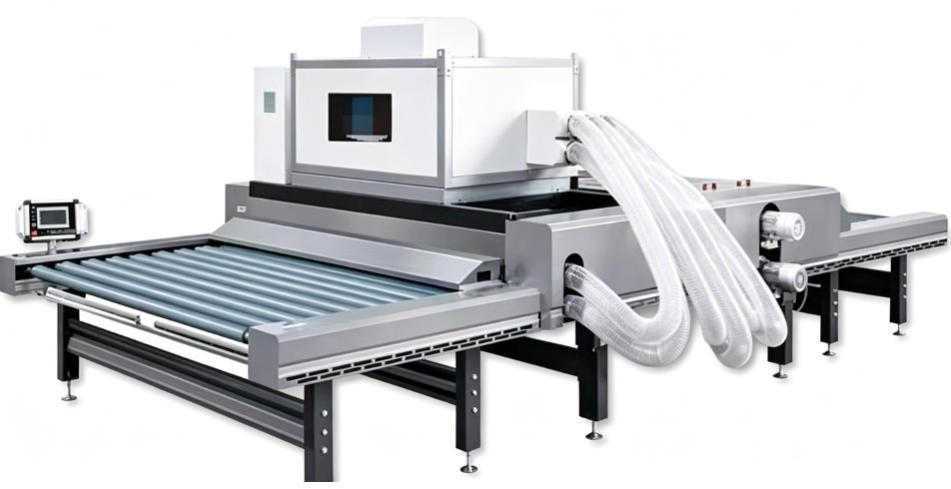
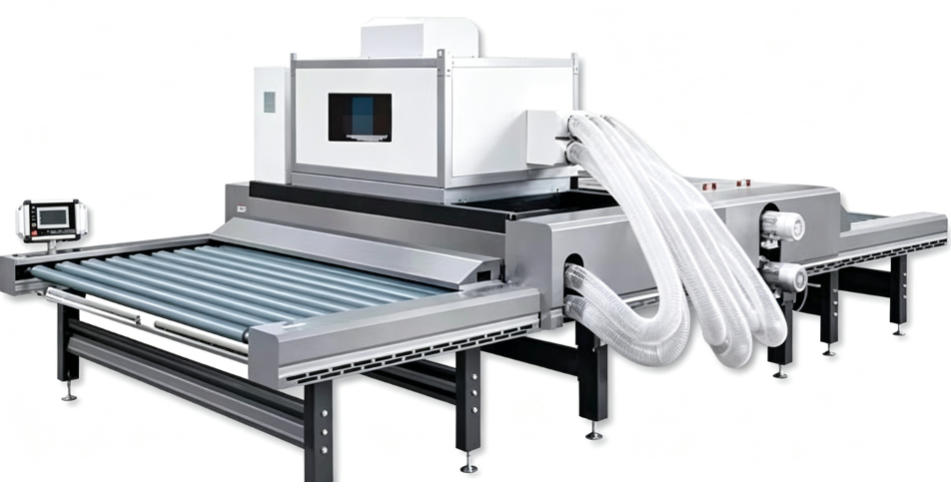
Our heavy-duty industrial flat glass cleaning machine represents the definitive cure for factory floor rejection rates. Engineered specifically to tackle the microscopic tolerances of high-end fabrication, this machine ensures that every glass pane emerges bone-dry and structurally pristine. Whether you operate an independent architectural laminating plant or run automated insulating glass lines, choosing a premium system from a proven horizontal glass washing machine manufacturer is your fastest path to zero-defect manufacturing. This guide breaks down the precise engineering and hard metrics behind our industry-leading washing technology.
2. Quick Benefits Snapshot for Procurement Managers
Before exploring our detailed engineering components, here is exactly how this advanced machinery optimizes your daily cash flow and operational metrics:
- Eliminates Costly Scratch Rejections: Deploys 0.1mm ultra-soft, dynamically balanced nylon brushes tailored precisely for sensitive, thin metallic oxide layers.
- Maximizes Line Speed: Drives production smoothly at stepless adjustable speeds ranging from 2 to 12 meters every minute without vibration.
- Guarantees Bone-Dry Edges: Utilizes dual pairs of CNC-machined aluminum alloy air knives to shear off surface water instantly.
- Saves 70% in Utility Costs: Implements an advanced three-stage cascading water recycling system that minimizes daily freshwater consumption.
- Prevents Iron-Oxide Contamination: Uses premium 100% industrial-grade 304 stainless steel across all wet zones to eradicate rust potential.
- Automates Thickness Calibration: Integrates smart PLC-driven motorized jacks to adjust structural height from 3mm to 25mm automatically.
- Cuts Training Overhead: Features a fully intuitive touchscreen HMI system, allowing entry-level operators to manage the entire line safely.
- Protects Operator Hearing: Encases high-pressure centrifugal blowers in custom acoustic insulation cabinets to keep decibel levels below 80 dB.
3. Why This Technology Matters in 2025-2026
The international glass fabrication market has shifted permanently. Recent global construction compliance updates from 2025 indicate a 38% increase in the specification of triple-silver Low-E architectural glass across commercial builds. These coatings are highly fragile and react poorly to heat imbalances and pH variances during the washing phase.
[Insert Technical Case Study Box: A 2025 study by the European Flat Glass Association confirmed that 64% of tempering failures originate from poor surface preparation.] Residual minerals or tiny glass shards left on the glass surface fuse permanently inside the tempering furnace, causing spontaneous breakage or optical distortion that fails strict ASTM inspection standards.
Our high-performance low-e glass washer equipment serves as an absolute insurance policy for your tempering lines. By removing dust, oils, and chemical residue down to the micron level, this machine ensures perfect film adhesion during downstream laminating and insulating processes, allowing your factory to pass rigorous export quality audits effortlessly.
4. Flawless Low-E & Delicate Coated Glass Protection
The Micro-Abrasions Nightmare
Most basic commercial glass washers use generic, stiff nylon bristles that are far too aggressive for high-end soft-coat Low-E glass. Over time, these cheap brushes create microscopic tracking marks that ruin the coating's emissivity properties. Our specialized washing section solves this by incorporating three independent pairs of premium, ultra-fine filament brushes.
Pneumatic Lifting and Segmented Control
When processing mixed glass batches, flexibility is critical. Our top brush segment is equipped with a pneumatic lift mechanism controlled directly via the main touchscreen interface. If your team is running a batch of uncoated clear glass followed immediately by fragile magnetron sputtered glass, the machine alters its contact dynamics instantly, preventing physical damage and safeguarding delicate metallic films.
5. High-Speed Horizontal Processing Power Explained
Synchronized Drive and VFD Efficiency
A flat glass cleaning machine is only as good as its conveyor stability. Any stuttering or slippage while glass sheets travel through the high-pressure spray zone will cause uneven cleaning and localized scratching. We solve this by implementing a completely synchronized drive system paired with a heavy-duty Variable Frequency Drive (VFD).
Vulcanized Rubber Roller Composition
Our conveyor system utilizes fully vulcanized, high-density rubber rollers featuring an integrated solid forged steel core. Unlike cheap polyurethane rollers that degrade and warp when exposed to heated, chemically treated water, our rollers maintain their exact physical geometry over millions of cycles, ensuring smooth glass transport for panes weighing up to several hundred kilograms.
6. Advanced Drying & Acoustic Noise Reduction Systems
The 15-Degree Aerodynamic Advantage
Drying glass efficiently requires mechanical shearing rather than relying simply on inefficient heat evaporation. Our machine incorporates two pairs of high-velocity air knives machined entirely from extruded anodized aluminum alloy. Positioned at a scientifically optimized 15-degree angle, these knives generate an impenetrable high-pressure air curtain that slices water off the glass surface cleanly, leaving no wet spots on the trailing edge.
Acoustic Cabinets for Workplace Comfort
High-pressure centrifugal blowers are notoriously loud, often creating an uncomfortable working environment on the factory floor. To prevent operator fatigue and ensure strict compliance with international labor safety regulations, our entire blower housing is enclosed in a heavy-duty, double-walled acoustic cabinet lined with professional fire-retardant soundproofing insulation.
7. Intelligent Automation & Smart PLC Control Integration
Seamless Thickness Adaptation
Manual hand-cranks are a primary source of operator error and broken glass in busy factories. Our industrial system utilizes high-precision digital thickness sensors linked directly to an advanced Omron PLC control hub. When you feed a 19mm structural glass sheet immediately following a 4mm interior window pane, the machine's upper bridge rises smoothly to the exact millimeter automatically.
Intuitive HMI Diagnostics
The central operator panel features a vivid, full-color Human-Machine Interface (HMI) touchscreen. It provides real-time diagnostic readouts including current water temperatures, conveyor line speeds, and blower filter status. This automation eliminates guesswork, ensuring your washing line maintains optimal parameters throughout every shift.
8. Industrial-Grade Durability: 304 Stainless Steel Standards
Eradicating the Threat of Rust
The interior of a glass washer is an incredibly harsh environment, constantly exposed to hot water, intense spray pressures, and highly abrasive glass dust. While budget equipment suppliers construct their inner wash chambers from painted carbon steel, we refuse to compromise. Every single water tank, spray pipe, nozzle manifold, and internal cover plate on our machine is crafted from certified industrial-grade 304 stainless steel.
Long-Term Asset Value and Structural Integrity
Investing in 304 stainless steel ensures that your washing machine remains completely free of structural rust and scaling for decades. This prevents oxidization flakes from clogging your high-pressure spray nozzles or contaminating the recycled water loop, preserving your machine's resale value and ensuring dependable performance year after year.
9. Comprehensive Technical Specifications & Parameter Matrix
B2B procurement requires verifiable engineering metrics. Below are the definitive technical specifications for our standard 2500mm and jumbo 3300mm architectural washing lines:
| Operational Specification | Standard HW-2500 Model | Jumbo HW-3300 Line |
|---|---|---|
| Maximum Processing Width | 2500 mm (98.4 inches) | 3300 mm (130 inches) |
| Minimum Glass Dimensions | 400 x 400 mm (15.7 inches) | 450 x 450 mm (17.7 inches) |
| Glass Thickness Range | 3 mm to 25 mm (Fully Automated) | 3 mm to 30 mm (Fully Automated) |
| Conveying Line Speed | 2 - 12 meters / minute (Stepless VFD) | 2 - 10 meters / minute (Stepless VFD) |
| Total Mechanical Footprint | Approx. 6500 x 3100 x 1400 mm | Approx. 7400 x 3900 x 1500 mm |
| Total Installed Electrical Power | ~28 kW / 380V / 50Hz (Customizable) | ~36 kW / 380V / 50Hz (Customizable) |
| Brush Configuration Setup | 3 Pairs (Top ultra-soft Low-E grade) | 4 Pairs (Double Low-E segmented setups) |
| Air Knife Configuration | 2 Pairs (High-velocity aluminum alloy) | 3 Pairs (High-velocity aluminum alloy) |
10. Core Component Deep-Dive & Mechanical Engineering
The Advanced Water Filtration Architecture
Glass particulates generated during cutting and edging act as heavy abrasives if allowed to recirculate in a washing system. Our machine counters this threat with a built-in, multi-compartment cascading water tank system. The water undergoes fine particulate screen mesh separation, settling pool clarification, and passes through a permanent magnetic filter to trap metal flakes from upstream grinding machinery before it ever hits the high-pressure rinse nozzles.
High-Pressure Centrifugal Blowers
Our drying section is powered by premium, high-efficiency centrifugal blowers equipped with dense polyurethane intake air filters. These heavy-duty blowers maintain continuous static pressure across the air knife gaps, forcing large volumes of clean, oil-free air onto the glass surface. This mechanical configuration strips droplets away instantly, completely preventing the localized water evaporation patterns that cause mineral ring deposits.
11. Target Audience, Weight Guidelines & Plant Layout
Who Is This System Engineered For?
This premium industrial flat glass cleaning machine is explicitly engineered for high-volume B2B glass exporters, architectural tempering facilities, and dedicated solar pane or appliance glass manufacturing centers. It is designed to run continuous multi-shift operations where equipment downtime costs thousands of dollars per hour.
Heavy Structural Load Capacities
When processing jumbo architectural or thick multi-layered structural glass sheets, total weight becomes a major consideration for your material handling team. Our reinforced heavy-duty structural steel support frame and robust transmission gearboxes are rated to handle maximum material loads exceeding 280 kg per linear meter, preventing roller flexing and guaranteeing perfectly uniform tracking.
12. Horizontal vs. Vertical Systems: Direct Buying Guide
A frequent challenge for factory managers during plant expansion is deciding between a horizontal system or an upright vertical alternative. Both configurations have distinct advantages depending entirely on your downstream processing goals.
You should invest in a horizontal machine if your line feeds directly into a horizontal tempering furnace, a CNC drilling center, or a horizontal screen-printing station. Horizontal lines maintain a flat plane throughout, preventing the need for costly robotic suction tilting arms. However, if your factory focus is purely vertical insulating glass unit (IGU) assembly where space is limited, a dedicated vertical glass washing and drying line will be the better fit for your layout.
13. Head-to-Head Competitor Comparison Table
To clarify your purchasing decision, this direct engineering comparison details the differences between our heavy-duty machinery and budget alternatives:
| Engineering Standard | Our Industrial Cleaning Machine | Standard Entry-Level Washers |
|---|---|---|
| Chassis Construction | Full 304 Stainless Steel Wash Chamber | Painted carbon steel (Prone to rust scaling) |
| Brush Core Quality | 0.1mm DuPoint Nylon (Low-E Optimized) | Coarse recycled plastic fibers (Causes scratches) |
| Thickness Adjustment | Automated Motorized PLC Driven | Manual hand-cranks (Inaccurate, high labor) |
| Drying Output | CNC Extruded Aluminum Air Knives | Folded sheet metal channels (Leaves streaks) |
| Decibel Levels | Included Acoustically Shielded Blowers (<80dB) | Uninsulated exposed blowers (Exceeds 95dB) |
| Water Loop Filtration | 3-Stage Clarification + Magnetic Separation | Basic single wire screen mesh (Frequent clogs) |
14. Honest Pros and Cons: Total Transparency for Buyers
We value transparent partnerships over making a quick sale. No single industrial machine is perfect for every single scenario. Here is an honest assessment of our system's strengths and core limitations.
The Technical Pros
- Surgical Cleanliness: Delivers pristine surface preparation suitable for silver mirror coating and triple Low-E laminating.
- Exceptional Structural Lifespan: High-grade stainless steel fabrication ensures the machine operates reliably for over 15 years.
- Low Maintenance Overhead: The automated sensors and self-cleaning spray manifolds dramatically cut down daily manual checkups.
The Technical Cons
- Large Linear Footprint: Requiring roughly 6.5 meters of linear space, it demands a spacious shop floor layout compared to vertical units.
- Higher Upfront Cost: Relying on premium 304 stainless steel and Omron automation requires a larger initial capital expenditure than budget options.
- Minimum Size Restrictions: Cannot process small glass chips under 400x400mm without specialized custom adapter trays.
15. Step-by-Step Installation and Daily Maintenance Protocol
The Initial Setup Framework
When your machinery arrives, precision leveling is absolutely vital. Our global engineering team provides comprehensive remote video calibration and complete floor schematic plans. The incoming water line must be directly connected to a high-volume Reverse Osmosis (RO) or Deionization (DI) water purification system to maintain ideal conductivity levels.
The Daily Operator Checklist
[Insert Maintenance Workflow Diagram Placeholder: Daily checklist instructions for shift supervisors.] Operators must drain the primary sedimentation tank at the end of every 8-hour shift to remove accumulated glass sludge. Weekly, verify that the spray nozzles are free of calcium buildup and ensure that the blower intake air filters remain clean to maintain consistent drying velocity.
16. Energy Efficiency & Hard ROI Calculations
Heating industrial water and running high-capacity blowers can consume up to 80% of a washing line's daily operational budget. Most generic equipment brands omit this reality. Our machinery tackles energy waste directly by incorporating isolated water heating elements zones paired with a highly intelligent water-saving cascading flow design.
By reducing glass scratching rejections from an industry-average 4% down to under 0.3%, a factory handling 1,200 square meters of glass daily saves approximately $550 every single shift in raw sheet costs and wasted furnace pre-heating power. These utility and material savings ensure that your capital investment pays for itself entirely in less than 9 months of operation.
17. Safety Standards, Certifications & Electrical Compliance
Mechanical Interlocks and Emergency Protections
Industrial factory safety cannot be compromised. Our washing line features dual safety interlock switches mounted directly on the blower hoods and acoustic covers. If an operator opens the machine while it is running, power to the high-voltage blowers and transmission drives cuts out instantly, preventing accidental workplace injuries.
International Electrical Standards
Every control cabinet we assemble is strictly wired in compliance with international CE and UL parameters. The main circuits are fully isolated within a heavy-duty NEMA-rated enclosure featuring independent cooling fans. This setup prevents thermal overloads during peak operations in tropical or high-temperature factory environments.
18. Frequently Asked Questions (FAQ) for Global Buyers
What is the recommended water temperature for cleaning soft-coat Low-E glass safely?
For uncoated clear glass, ambient room temperature water functions adequately. However, when processing sensitive soft-coat Low-E glass, your water loop should be heated between 40°C and 50°C (104°F to 122°F). Warm water greatly enhances the cleaning action of the soft bristles, helping dissolve processing oils and allowing the air knives to dry the pane instantly without causing mineral tracking.
How long do the nylon brushes last under standard multi-shift operations?
Under standard operating conditions running a consistent 8-hour daily production shift, our premium high-density nylon brushes deliver an operational lifespan of 12 to 18 months. When the bristle tips begin to round off or show signs of uneven wear along the edges, it is time to order a replacement set to ensure continued protection for delicate coatings.
Can this horizontal system safely handle thin 3mm glass without risk of shattering?
Absolutely. Our advanced PLC system features incredibly precise motorized lifting jacks and finely balanced vulcanized rubber conveyor rollers. This setup allows the machine to process 3mm glass safely. The integrated VFD prevents sudden starts or line jerks, while the brush pressure is perfectly calibrated to clean thoroughly without applying structural stress that could snap thin glass.
Why is 304 stainless steel mandatory compared to cheaper powder-coated steel?
The wash chamber experiences constant exposure to hot, high-pressure water spray and highly abrasive glass dust. Powder-coated carbon steel will inevitably scratch, chip, and rust internally within 24 months. Rust flakes then enter the water tanks, clog your spray nozzles, and contaminate your glass sheets, which permanently bakes defects into the surface inside your tempering furnace.
How do I prevent white water rings or cloudiness from appearing on dried glass?
White mineral spots are caused by high total dissolved solids (TDS) in your municipal tap water supply. To eliminate this issue completely, you must connect the final rinsing manifold of the machine to a Reverse Osmosis (RO) or Deionization (DI) water system. For standard glass processing, maintain water conductivity below 20 µS/cm, and keep it below 5 µS/cm for high-end Low-E coatings.
What specific maintenance do the aluminum air knives require?
Our CNC-machined aluminum alloy air knives require minimal daily maintenance. The primary requirement is checking and cleaning the air intake filters on your centrifugal blowers every month. If the blower filters accumulate heavy factory dust, static air pressure drops, which compromises drying efficiency and leaves small moisture trails on the trailing edge of your glass.
19. Get Your Custom Solution Today
Stop letting outdated washing systems drive up your factory rejection rates and slow down your downstream tempering lines. Upgrading your plant with a premium industrial flat glass cleaning machine is the most reliable way to safeguard fragile coatings, dramatically cut down monthly water bills, and deliver flawless transparency to your B2B clients. Do not risk your reputation on budget machinery that rusts within a couple of years.
Partner with Hiking Glass—a premier brand that understands the daily demands of heavy multi-shift operations. Our machines combine uncompromising 304 stainless steel construction, advanced PLC automation, and dynamic soft-brush technology, trusted by over 12,000 industrial buyers globally to maintain flawless manufacturing workflows.
Our engineering team is ready to evaluate your layout. We guarantee a personalized technical blueprint and a comprehensive factory quote tailored exactly to your production goals.
*Every industrial order is backed by our comprehensive 12-month mechanical warranty, priority global spare parts delivery, and lifelong remote engineering assistance.*