
Automatic Glass Cutting Price: The 2026 ROI & Cost Analysis Guide
This article is written by Marcus Chen, a 15-year veteran in the glass machinery export industry who has helped over 850 factories in 50 countries modernize their production lines.
Written by Marcus Chen – Senior Technical Consultant at Hiking Glass and mirror.
Automatic Glass Cutting Price: Is the ROI Worth the Investment in 2026?
The global glass fabrication landscape has shifted dramatically. If you are still calculating your production costs based on manual labor and 2018 material waste standards, your margins are likely evaporating. In today's market, the question isn’t just about the automatic glass cutting price; it’s about how quickly that machine pays for itself in an era of skyrocketing labor costs and tightening sustainability regulations.
According to 2025 industry data from the Global Glass Processing Association, factories that transitioned to high-efficiency
In this guide, we will peel back the curtain on the real costs of automation. We will analyze the
Quick Executive Summary: The 2026 Cost-Benefit Matrix
| Feature/Metric | Manual Cutting | Entry-Level CNC | High-End Automatic Line |
| Initial Investment | Low ($1k - $5k) | Mid ($25k - $55k) | High ($85k - $200k+) |
| Material Yield | 78% - 82% | 90% - 94% | 96% - 98.5% |
| Labor Requirement | 3-5 Skilled Workers | 1 Operator | 0.5 (Supervisory) |
| Breakage Rate | 5% - 8% | < 1.5% | < 0.5% |
| ROI Timeline | N/A | 14 - 20 Months | 10 - 16 Months |
The Three Price Tiers of 2026
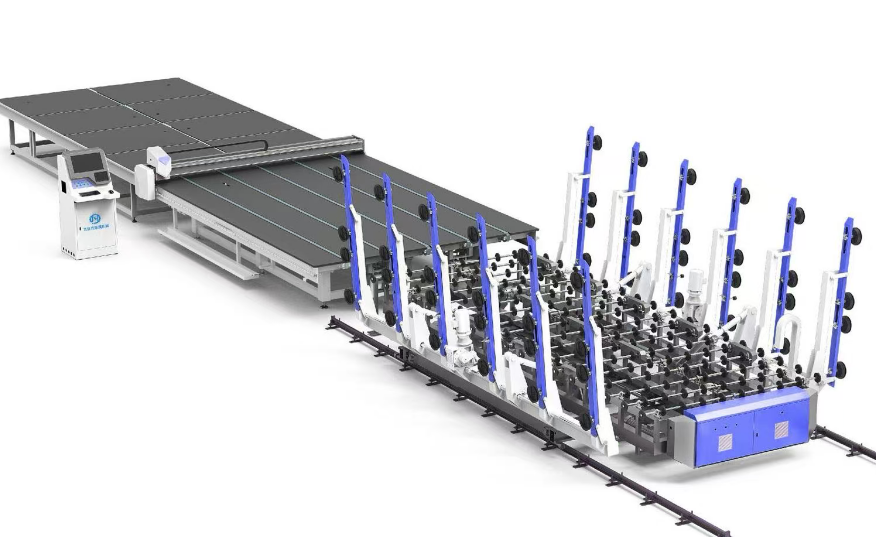
Most wholesalers and factory owners I consult with fall into one of these three investment categories:
-
The Standalone CNC Glass Table ($25,000 - $45,000): Best for small to mid-sized shops focusing on architectural glass. These machines offer high CNC glass table cost efficiency but require manual loading and unloading.
-
The Integrated Cutting Line ($55,000 - $95,000): This includes an automatic loading arm and a breaking table. It’s the "sweet spot" for 80% of export-oriented factories.
-
The High-Speed Precision Line ($100,000 - $250,000+): Features dual-bridge technology, magnetic levitation motors, and AI-driven nesting software. These are designed for 24/7 operations where every second saved translates to thousands of dollars.
Hidden Costs Often Overlooked in Quotes
When comparing an automatic glass cutting price, don't let a low base price fool you. Most "budget" suppliers exclude the following:
-
Software Licensing: Some brands charge an annual fee for optimization software. Over 5 years, this can add $15,000 to your total cost.
-
Installation & Calibration: Professional leveling and laser calibration are non-negotiable for 0.1mm accuracy.
-
Voltage Stabilization: In many industrial zones, inconsistent power can fry your servo motors. Budgeting $2,000 for a high-quality stabilizer is a "pro move" I always recommend.
Optimization Software: The "Brain" of the Operation
I once worked with a client in Vietnam who was using a 10-year-old manual process. Their waste rate was 18%. By switching to a modern CNC system with advanced nesting software, we dropped their waste to 4%.
Let’s do the math: * Monthly glass spend: $100,000
-
Manual Waste (18%): $18,000
-
CNC Waste (4%): $4,000
-
Monthly Savings: $14,000
In this scenario, the automatic glass cutting price of $70,000 was recouped in just five months on material savings alone!
Labor Redefinition: From Brawn to Brains
Finding skilled glass cutters is getting harder and more expensive. A modern CNC glass table cost includes the benefit of reducing your reliance on specialized "master" cutters.
-
Manual: Requires 3 people to handle, measure, and cut a jumbo sheet.
-
Automatic: 1 operator manages the entire loading and cutting cycle via a touchscreen.
The Power of Precision (0.1mm Matters)
Precision reduces the "downstream" costs. If a cut is 1mm off, the glass might break during tempering or won't fit the window frame. Modern glass fabricating equipment uses high-precision servo motors that ensure 99.9% of pieces move to the next stage without rework.
Consumables and Wear Parts
You need to budget for the "small things" that keep the machine running:
-
Cutting Wheels & Axles: Cheap wheels chip the glass edges, leading to breakage in the furnace. Always use diamond-coated or high-grade tungsten wheels.
-
Cutting Oil: Automatic systems use specialized oil to lubricate the score line. It’s a small cost that prevents millions in lost glass.
-
Filters and Belts: Routine 6-month replacements prevent catastrophic motor failure.
Energy Consumption Trends
With energy prices rising, the 2026 generation of glass fabricating equipment focuses on "Smart Power." Modern machines use regenerative braking and high-efficiency vacuum pumps that reduce electricity consumption by up to 30% compared to models from 2020.
Technical Support: The "Insurance" Policy
When your machine goes down, your factory stops. Does your supplier offer remote diagnostics? Can they ship a servo motor in 24 hours? At Hiking Glass and mirror, we’ve found that having a 24/7 technical "hotline" is often more valuable to a client than a $5,000 discount on the initial price.
4. Case Study: How a Mid-Sized Factory Hit 95% Efficiency
The Client: A window manufacturer in Southeast Asia.
The Problem: High labor turnover and a 12% glass breakage rate.
The Solution: Implementation of a Fully Automatic Glass Cutting Line with Integrated Loading.
The Financial Breakdown:
-
Investment: $85,000 (Full automatic glass cutting price including shipping).
-
Old Monthly Labor Cost: $6,000 (5 workers).
-
New Monthly Labor Cost: $1,500 (1 operator).
-
Material Savings: $8,200 per month due to better nesting.
-
Total Monthly Gain: $12,700.
The Result: The machine paid for itself in 6.7 months. Beyond the money, the owner reported "zero headaches" regarding quality complaints from his customers.
5. 5 Critical Mistakes to Avoid When Buying Glass Machinery
-
Buying "Too Much" Machine: Don't buy a $200k line if your daily volume only requires a $40k table. Analyze your throughput first.
-
Ignoring Software Compatibility: Ensure the machine's software can "talk" to your ERP or CAD system.
-
Underestimating Floor Space: An automatic loader needs "swing room." I’ve seen factories buy machines that literally wouldn't fit through their doors.
-
Skipping the Test Cut: Never buy a machine without seeing a video of it cutting your specific glass type (e.g., 19mm thick or Low-E).
-
Focusing Only on the Sticker Price: As we’ve shown, the automatic glass cutting price is only 20% of the total 5-year cost of ownership.
6. FAQ: Your Questions on Glass Automation Answered
Q: How does the automatic glass cutting price compare between Chinese and European brands in 2026?
A: Generally, top-tier Chinese brands like Hiking glass and mirror offer 90% of the performance of European brands at 50-60% of the CNC glass table cost. The gap has narrowed significantly due to the global sourcing of components like Japanese motors and German software.
Q: Can these machines cut shaped or "odd-sized" glass?
A: Yes. Modern glass fabricating equipment can import DXF files. Whether you need a circle, a hexagon, or a complex architectural curve, the software handles the pathing automatically.
Q: What is the typical lifespan of a CNC glass table?
A: With proper maintenance (oiling and cleaning), a high-quality machine should last 12-15 years. The electronics usually require an upgrade around year 8.
Q: Is it difficult to train staff to use the automatic cutting software?
A: Not anymore. Most 2026 interfaces are "iPad-style" touchscreens. A worker with basic computer skills can be fully trained in 2-3 days.
Q: Does a higher automatic glass cutting price guarantee better accuracy?
A: Not always. Accuracy depends on the "rigidity" of the frame and the quality of the rack-and-pinion system. A heavy-duty frame is often more important than a fancy brand name.
Q: How does automation affect the glass cutting ROI for Low-E glass?
A: Low-E glass is sensitive to scratches. Automatic lines use "air-cushion" tables and specialized contact-free loading that drastically reduces surface damage, saving you from expensive rejects.
Final Verdict: The Bottom Line on Investment
Investing in an automatic system is no longer a luxury—it’s a survival requirement for the 2026 market. While the automatic glass cutting price might seem daunting, the compounding benefits of reduced waste, lower labor costs, and higher precision create a glass cutting ROI that few other investments can match.
At Hiking glass and mirror, we don't just sell machines; we design production solutions that make you more profitable. Stop letting your margins shatter on the floor.