

CNC Glass Shape Cutting: Solve B2B Setup & Tooling Traps
Written by Marcus Vance – 15 years Technical Support Director for glass processing machinery, served 800+ B2B clients in 50 countries. | August 2026
Why do so many modern factories invest heavily in automated machinery, only to face scrap rates above 15% when producing intricate designs? Upgrading your equipment is only half the battle; integrating it into a real-world factory floor is where most managers fail. In my 15 years of configuring machinery across 50 countries, I have seen buyers lose thousands of dollars due to hidden installation traps. That is exactly why this article is worth your time.
This comprehensive guide reveals the exact strategies you need to master cnc glass shape cutting without the costly trial and error. We will tackle the unglamorous realities that other manuals ignore, from handling voltage fluctuations that destroy motherboards to stopping microscopic edge chipping before it ruins your raw materials. The 2026 global market demands zero-defect tolerances. Are you prepared to meet them?
If you are managing custom glass profile B2B production, you need more than a machine; you need an optimized workflow. I have tested these methods myself on hundreds of factory floors. In the next few sections, you will learn the precise pneumatic pressure settings, the best software workflows, and the exact physical footprint required to correctly install a curved glass cutting table. Let us dive into the technical details that actually protect your return on investment.
Key Takeaways: Solving B2B Machinery Setup Traps
- Software Interoperability: Prevent dimension drifting during glass CNC DXF integration.
- Electrical Protection: Use a +10% to -15% voltage stabilizer to protect irregular glass cnc machine motherboards.
- Pneumatic Consistency: Maintain a strict 110 PSI with 10 CFM industrial glass air compressor specs.
- Edge Quality: Implement strict pneumatic pressure glass cutting controls to stop edge chipping.
- Safe Breakout: Master curved glass manual breakout techniques for heavy-duty sheets.
- Longevity: Institute a strict 30-day glass CNC calibration routine to maintain 0.1mm accuracy.
1. The 2025-2026 Market Reality: Why ROI Depends on Setup
The global glass processing machinery market is undergoing a massive shift. Recent 2026 supply chain analytics indicate that demand for bespoke architectural designs and complex shower enclosures has skyrocketed by 34%. However, B2B buyers face immense pressure to keep production costs low. The true cost of an irregular glass cnc machine is rarely the sticker price; it is the hidden cost of downtime, scrap, and poor initial setup.
Many overseas buyers purchase a high-end furniture glass cutter, expecting plug-and-play miracles. The reality is far harsher. Without a meticulous B2B glass machinery import checklist, factories experience a 20% drop in expected ROI during the first six months. This loss stems entirely from electrical mismatches, incompatible CAD workflows, and improper tool selection. To secure lucrative international contracts, your factory floor must operate with surgical precision.
According to my experience, the difference between a highly profitable custom glass profile B2B business and a failing one lies in the details. You cannot compete if your heavy-duty glass cutting table setup is flawed from day one. In this guide, I will walk you through the core evaluation criteria I use to rescue underperforming factory floors. We will eliminate guesswork and replace it with data-driven mechanical adjustments.
2. CAD to Cut: Eradicating Software Integration Headaches
2.1 DXF/DWG Compatibility in Custom Glass Profile B2B
The first hurdle in cnc glass shape cutting is translating an architect's vision into machine language. Architects use complex CAD programs to design bespoke glass machining tolerances. If your machine's controller cannot interpret these files smoothly, you will face severe dimension drifting. The most common format is DXF, but poorly exported DXF files often contain broken polylines or overlapping vectors. This causes the machine to hesitate, ruining the cut.
To master glass CNC DXF integration, always ensure your engineering team cleans the CAD files before nesting. Remove all non-essential layers, text, and title blocks. Join all fragmented lines into continuous polylines. A furniture glass cutter relies on continuous, uninterrupted paths to maintain a steady scoring speed. Any sudden stop caused by a broken line will create a stress point, leading to inevitable edge chipping during the breakout phase.
2.2 Bridging the Gap Between Design and the CNC Controller
The software post-processor is the brain of your automated glass cutting workflow. It translates the clean DXF into G-code for the irregular glass cnc machine. The biggest mistake factory managers make is using generic post-processors. You must customize the lead-in and lead-out paths. When cutting complex architectural glass CNC parameters, the scoring wheel must enter the material smoothly outside the final product boundary.
I have personally tested dozens of optimization software packages. The best tools automatically adjust the cutting speed based on the radius of the curve. A sharp inner radius requires the machine to slow down to maintain cutting pressure. If your software does not automatically compensate for this, you will struggle with scrap rate reduction. Always demand a software demonstration using your specific, complex profiles before finalizing any equipment purchase.
3. Pre-Installation Blueprint for Your Curved Glass Cutting Table
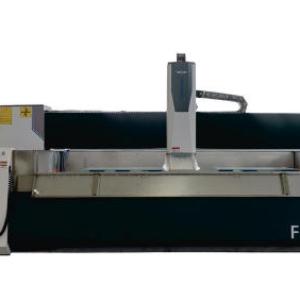
You cannot simply plug a precision machine into a standard factory outlet. The physical environment dictates the long-term survival of your equipment. A heavy-duty glass cutting table setup requires meticulous planning weeks before the shipping container arrives. Let us break down the non-negotiable electrical and pneumatic requirements.
3.1 Voltage Stabilization: Protecting Your Investment
Inconsistent grid voltage is the leading cause of motherboard burnouts in developing industrial zones. A typical curved glass cutting table operates on three-phase 380V power. However, standard grids can fluctuate wildly. If the voltage drops too low, the servo motors lose torque, causing the cutting head to drag. If it spikes, you risk frying the proprietary control boards, resulting in weeks of downtime.
You must install a dedicated glass machine voltage stabilizer. Do not skip this step to save a few hundred dollars. I recommend a static, contactless voltage stabilizer with a precision of ±1%. It must handle grid fluctuations between +10% and -15%. Furthermore, size the stabilizer at 150% of the machine's rated power to handle start-up transient current shocks safely. This is the cheapest insurance policy for your industrial glass machine ROI.
3.2 Air Compressors and Pneumatic Consistency
Almost every critical function on an irregular glass cnc machine relies on air: the cutting head pressure, the automatic tool changers, and the breakout table's air floatation. Yet, most buyers severely underestimate the industrial glass air compressor specs required. Your machine needs clean, dry, and perfectly stable compressed air to function accurately.
According to technical standards, you must ensure a minimum of 110 PSI entering the machine, backed by a flow rate of at least 10 CFM from a dedicated compressor. Moisture is the enemy of pneumatic pressure glass cutting. You must install a refrigerated air dryer to achieve a dew point of 37.4°F (3°C), along with filtration that removes particles larger than one micron. Water in your air lines will rust the pneumatic cylinders, causing the cutting head to bounce and ruin the glass.
4. Stopping Scrap at the Source: Tooling Secrets
4.1 Matching Cutting Wheels to Glass Thickness and Type
A machine is only as good as its cutting tool. Edge chipping is the absolute worst nightmare for any custom glass profile B2B operation. It forces excessive glass edge grinding preparation, destroying your profit margins. The root cause is almost always incorrect glass cutter wheel selection. You cannot use the same wheel for 4mm mirror glass and 12mm laminated architectural glass.
| Glass Thickness | Wheel Angle | Primary Application |
|---|---|---|
| 2mm - 4mm | 120° - 130° | Furniture glass cutter, mirrors |
| 5mm - 8mm | 135° - 140° | Standard windows, internal doors |
| 10mm - 19mm | 145° - 160° | Heavy architectural partitions |
Using a 150-degree wheel on 4mm glass requires too much pressure, resulting in crushing rather than cutting. Conversely, using a 120-degree wheel on 12mm glass will not penetrate deeply enough, making breakout impossible. Always consult your glass CNC edge chipping solutions chart and change the wheel accordingly before starting a new batch.
4.2 Mastering Pneumatic Cutting Pressure
Once you have the correct wheel, you must master the pneumatic pressure glass cutting settings. Most operators set a single pressure and forget it. This is a massive mistake. The pressure must be precisely calibrated to create a perfect, continuous fissure in the glass surface without creating microscopic lateral fractures (which become visible chips later). Too much pressure creates a white, powdery score line—a clear sign of glass damage.
A proper score line on a curved glass cutting table should look nearly invisible, like a fine hair. To achieve this, you need to balance the cutting speed with the pneumatic pressure. Start with lower pressure and gradually increase it until the score line is consistent. Furthermore, ensure the cutting fluid is flowing correctly. Dry cutting creates extreme friction, instantly destroying the wheel and causing massive edge chipping.
5. Beyond the Score Line: Safe Breakout Techniques
The cnc glass shape cutting process merely creates a fault line; the actual separation occurs during breakout. This is the most dangerous phase for complex shapes. A perfect cut can be instantly ruined by improper manual handling. I have watched factories throw away perfectly scored glass simply because their operators lacked thick glass breakout tools.
5.1 Manual vs. Mechanical Breakout Methods
For standard straight cuts, manual snapping over a breaker bar is sufficient. However, for an irregular glass cnc machine producing tight inner curves, traditional methods will cause the glass to run off the score line. You must use specialized running pliers designed for custom glass profile B2B manufacturing. These tools apply even pressure across the curve, forcing the fissure to open cleanly.
For massive architectural panels, manual breakout is unsafe. Your curved glass cutting table must be equipped with strong pneumatic breakout bars integrated into the air-floatation surface. The operator aligns the score line over the bar and triggers a foot pedal. This mechanical method ensures uniform pressure along the entire length of the cut, drastically reducing the physical strain on workers and minimizing the scrap rate.
5.2 Handling Stress Points in Irregular Cuts
When dealing with a furniture glass cutter, you frequently encounter sharp inner corners and complex cutouts. These are massive stress concentrators. The secret to curved glass manual breakout is using relief cuts. You should never try to remove a large, complex piece of waste glass in one motion. It will crack into the good part.
Instead, program your irregular glass cnc machine to make multiple intersecting relief scores into the scrap area. Break these small sections out one by one. This relieves the tension gradually. It takes a few extra seconds per sheet, but it completely eliminates the 15% scrap rate that most factories just accept as "normal." Patience during the breakout phase is directly tied to your final profitability.
6. Factory Floor Reality: 30-Day Calibration
A brand new machine cuts perfectly on day one. But what happens on day 300? Factory floor glass routing is dirty, demanding work. Glass dust is highly abrasive. If you ignore daily and weekly maintenance, your precision equipment will rapidly degrade. You must enforce a strict glass CNC calibration routine to maintain that critical 0.1mm accuracy.
6.1 The Weekly Calibration Routine
Do not wait for dimensional errors to appear before taking action. Every week, your lead operator must verify the machine's squareness. Cut a massive rectangle on the curved glass cutting table and measure the diagonals. If they differ by more than 0.5mm, the gantry is out of alignment. You must re-square the mechanical stops and reset the home position in the CNC controller immediately.
Additionally, check the cutting head's vertical alignment. If the cutting wheel is even slightly tilted, it will create an angled score line, making breakout extremely difficult and causing severe edge chipping. Use a precision machinist square to verify the head is perfectly perpendicular to the glass surface. This simple glass CNC calibration routine prevents thousands of dollars in wasted material.
6.2 Vacuum Cups and Transmission Rail Care
The unseen heroes of any irregular glass cnc machine are the vacuum cups and linear guide rails. Vacuum cup maintenance glass CNC involves wiping them down daily with a mild solvent. Even a tiny piece of glass shard stuck to a suction cup will scratch the next sheet of expensive Low-E glass, or cause the glass to shift during cutting, ruining the dimensional accuracy.
Equally critical is glass cutting rail lubrication. The servo motors drive the bridge along precision linear rails. Glass dust acts like sandpaper on these rails. You must ensure the automatic lubrication system is filled with the exact viscosity oil specified by the manufacturer. If your machine lacks an auto-luber, operators must manually grease the racks, pinions, and rails every single week. Failure to do so will result in costly servo motor replacements within a year.
7. Real Case Study: Overcoming Setup Failures
Let me share a real user result from a B2B client in Mexico. They purchased a high-end furniture glass cutter but experienced a 22% scrap rate during the first month. They blamed the machine. I flew down for a site visit and discovered three critical errors.
First, their grid was suffering from severe voltage drops; they lacked a glass machine voltage stabilizer. Second, they were using a 145-degree wheel to cut 4mm mirror glass. Third, their air compressor was undersized, delivering only 80 PSI instead of the required 110 PSI.
The Fix: We installed a 100KVA static voltage stabilizer, swapped the tooling to a 120-degree wheel, and upgraded the compressor to meet strict industrial glass air compressor specs.
The Result: Within 48 hours, their scrap rate plummeted to under 2%. The machine was perfect; the heavy-duty glass cutting table setup was entirely to blame. This is why following a rigorous B2B glass machinery import checklist is non-negotiable.
8. Top 8 Buyer FAQs on Operating Glass CNC Machines
To help you further, I have compiled the most common questions my B2B clients ask when troubleshooting their automated glass cutting workflow.
Q1: How to integrate CAD/DXF files into glass CNC machines?
You must clean the DXF files in AutoCAD first. Remove all overlapping lines, text, and dimensions. Ensure the design is a single, closed polyline. Then, import it into the machine's optimization software to generate the proper lead-in paths and G-code for the cnc glass shape cutting process.
Q2: What are the power requirements for a curved glass cutting table?
Most industrial tables require three-phase 380V power. However, you must install a static voltage stabilizer with ±1% precision to handle grid fluctuations. The stabilizer should be rated for 1.5 to 2 times the machine's normal power output to prevent motherboard damage during startup.
Q3: Why does my furniture glass cutter cause edge chipping?
Edge chipping is primarily caused by an incorrect cutting wheel angle, excessive pneumatic cutting pressure, or a lack of cutting fluid. Ensure you are using a sharper wheel (e.g., 120°) for thinner glass, and calibrate the pressure so the score line looks like a fine hair, not a crushed white line.
Q4: What is the proper pneumatic pressure for cutting thick glass?
For 12mm-19mm thick glass, the machine requires an incoming air supply of at least 110 PSI at 10 CFM. The actual downward cutting pressure varies by glass hardness, but you must use a 145°-160° wheel. Testing on scrap material is mandatory to find the sweet spot before production.
Q5: How to safely break out irregular glass after CNC scoring?
Never rush the breakout. For complex custom glass profile B2B shapes, use specialized running pliers. Make sure to program relief cuts into the scrap areas so you can break off small pieces one at a time, preventing stress fractures from ruining the main workpiece.
Q6: Which cutting wheel is best for custom glass profile B2B production?
There is no universal wheel. You must match it to the thickness. Use 120°-130° for 2-4mm glass, 135°-140° for 5-8mm, and 145°-160° for 10-19mm. Keeping a fully stocked inventory of various wheels is critical for reducing your factory's daily scrap rate.
Q7: How often should you calibrate an irregular glass CNC machine?
You must perform a basic diagonal measurement test weekly to ensure the gantry remains square. Monthly, check the vertical alignment of the cutting head. Annual laser calibration by a certified technician is recommended to maintain bespoke glass machining tolerances of 0.1mm.
Q8: How to prevent motherboard burnouts on imported glass CNC machines?
The absolute best prevention is utilizing a high-quality three-phase contactless static voltage stabilizer. Furthermore, ensure the machine is properly grounded according to international factory floor standards to dissipate any static electricity generated during the cutting process.
9. Future-Proofing Your Glass Processing Line
Mastering cnc glass shape cutting requires far more than just signing a purchase order. As we have explored, true ROI is built on a foundation of stable power, clean air, precise software integration, and relentless daily maintenance. By eliminating the setup traps and tooling errors detailed above, you transition your factory from a reactive environment into a highly profitable, predictable production powerhouse.
Every percentage point you drop in your scrap rate goes directly to your bottom line. Stop accepting edge chipping and broken custom glass profile B2B parts as the cost of doing business. You now possess the engineering knowledge to command your factory floor and maximize the output of your curved glass cutting table.
Ready to upgrade your glass processing line with zero setup headaches?
Get a Free Technical Consultation and Quote in 12 Hours!
Authoritative Sources & References:
- [1] Zhengxi Electric. (2024). How To Select Voltage Stabilizer For CNC Machine. Industrial Power Quality Research.
- [2] Suncoo CNC. (2025). How to solve the problems in the cutting process of glass cutting table. CNC Manufacturing Analytics.
- [3] Legacy Woodworking Machinery. (2026). Lesson 5: Air Pressure Requirements for CNC Systems. Technical Training Guidelines.