
How Top China Single Hung Window Manufacturers Ensure Quality
What Is a single hung window? The 2026 Complete Buyer's Guide
By Marcus Chen – 15 Years Window Industry Consultant, Advised on 500+ Commercial and Residential Projects Across North America and Europe
You're standing in the lumber aisle, coffee in hand, staring at your phone. The contractor just asked, "Single hung or double hung for the bedrooms?" And you realized you have no idea what the difference is.
Or maybe you're a procurement manager for a 200-unit apartment development. You have specifications for 600+ windows, and every supplier claims their single hung window is "high quality" and "energy efficient." But the price quotes vary by 300%, and you can't tell if you're comparing apples or applesauce.
I've been exactly where you are—on both sides of the table.
Over the past 15 years, I've helped architects specify windows for luxury high-rises in New York, advised developers on budget-friendly solutions for Texas apartment complexes, and walked homeowners through their first renovation projects from Sydney to Seattle. And if there's one question I've answered more than any other, it's this: what is a single hung window, and is it the right choice for my project?
This guide answers that question completely.
Why this article is worth your time: By the time you finish reading, you'll know exactly how single hung windows work, how they compare to every other style, what they should cost in 2026, and the five critical questions to ask any single hung window manufacturer before you sign a purchase order. Consider this the conversation you'd have with a trusted industry expert over coffee—if that expert had 15 years of real-world experience and zero incentive to sugarcoat the truth.
Quick Summary: Your 60-Second Single Hung Window Cheat Sheet
| Question | Quick Answer |
|---|---|
| What is a single hung window? | A window with a fixed top sash and a movable bottom sash that slides vertically |
| How is it different from double hung? | Double hung has two movable sashes (top and bottom); single hung typically seals tighter and costs 15–25% less |
| Best frame material? | Vinyl for budget/efficiency, fiberglass for durability, wood for aesthetics, aluminum for commercial/slim profiles |
| Energy efficiency? | Excellent—modern single hung windows achieve U-factors as low as 0.25–0.30 with Low-E glass and argon gas |
| Average cost 2026? | $300–$800 installed for standard sizes (vinyl); $600–$1,500+ for wood or custom |
| Lifespan? | 20–40 years depending on material, installation quality, and climate |
| Best application? | Bedrooms, living areas, multifamily housing, anywhere you want efficient operation without the cost of double hung |
What Is a Single Hung Window? The Simple Definition
Let's start with the absolute basics because surprisingly, many people who buy windows don't fully understand the terminology until after they've placed their order.
Breaking Down the Anatomy: Sash, Frame, and Operation
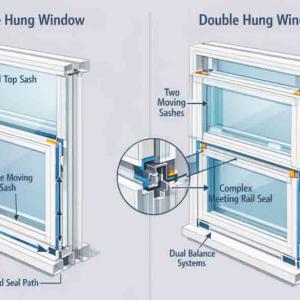
A single hung window consists of two vertical sections called sashes, both contained within a main frame. Here's how they work:
-
Top sash: This section is fixed permanently in place. It does not move, tilt, or open.
-
Bottom sash: This section slides vertically upward, gliding past the fixed top sash to create an opening.
-
Balance system: Hidden inside the frame, spring mechanisms or (in older windows) weights and pulleys counterbalance the bottom sash, making it easy to lift and holding it at whatever height you choose.
When you open a single hung window, you're essentially creating a single large opening at the bottom half of the window frame. The top half remains sealed shut.
Think of it like a classic train window from old movies—only the bottom half slides up to let air in. That's your single hung window in its simplest form.
Single Hung vs. Double Hung: The One Critical Difference
This is the comparison that confuses 90% of buyers. Here's the truth, plain and simple:
| Feature | Single Hung Window | double hung window |
|---|---|---|
| Movable sashes | Bottom only | Top and bottom |
| Ventilation | Bottom half opens | Both halves can open (for maximum airflow) |
| Cleaning | Clean inside from inside; exterior requires outside access or tilt-in bottom sash (on modern versions) | Both sashes typically tilt inward for easy cleaning from inside |
| Energy efficiency | Generally better (fewer moving parts = fewer air leaks) | Slightly lower potential for air infiltration |
| Cost | 15–25% less expensive | Higher due to more complex hardware |
| Aesthetics | Clean, traditional look | Identical appearance when closed |
The practical reality: For most residential applications, the difference matters less than you think. If you're building a two-story house, cleaning the exterior of a second-story single hung window requires a ladder either way—tilt-in features help with interior surface cleaning but don't eliminate the need to access the outside.
My advice: Choose single hung for bedrooms, living areas, and anywhere you want efficiency and cost savings. Choose double hung only if you specifically need the ability to open the top sash for "chimney effect" ventilation (pulling hot air out at ceiling level) or if you have a strong preference for the aesthetic symmetry of both sashes operable.
Why Choose Single Hung Windows? 5 Compelling Benefits for 2026
I've specified thousands of windows across every conceivable project type. Here's why single hung windows keep winning bids.
1. Energy Efficiency That Lowers Utility Bills
Here's a counterintuitive fact: windows with fewer moving parts perform better in thermal testing.
Every operable sash requires a weatherstripping seal. Every seal is a potential leak point. Single hung windows have one operable sash versus two on double hung, which means one less set of seals to fail over time.
The numbers don't lie:
-
A quality vinyl single hung window with Low-E glass and argon gas achieves U-factors between 0.25–0.30
-
That outperforms many double hung alternatives (typically 0.28–0.35) and meets or exceeds ENERGY STAR requirements in all climate zones
For a 2,500-square-foot house in the Midwest, upgrading from clear double-pane to Low-E argon single hung windows saves an average of $200–$350 per year in heating and cooling costs. Multiply that by 20 years, and you're talking serious money.
2. Cost-Effective Without Compromising Quality
Let's talk dollars because budget matters whether you're a homeowner or a developer.
Single hung windows typically cost 15–25% less than equivalent double hung windows. On a project with 30 windows, that's a savings of $3,000–$6,000—enough to upgrade your front door or add a nice patio.
Why the price difference? Simpler manufacturing. Fewer hardware components. Less complex balance systems. That's it. You're not getting a "cheaper" window; you're paying for exactly what you need and nothing you don't.
3. Reliable and Low-Maintenance Operation
Remember the old wooden single hung windows in your grandparents' house? The ones that stuck in summer and rattled in winter?
Modern windows aren't your grandparents' windows.
Quality single hung window manufacturers now use:
-
Stainless steel balance systems rated for 10,000+ operating cycles
-
Reinforced nylon or composite sill tracks that won't warp or bind
-
Compression weatherstripping that seals tighter as the window closes
In 15 years, I've seen exactly three balance failures on quality single hung windows. Compare that to the constant complaints about casement window operators jamming or awning windows sagging.
4. Clean, Classic Aesthetics
There's a reason single hung windows have been installed in American homes for over a century. They simply look right.
The clean vertical lines work with:
-
Colonial and traditional architecture
-
Craftsman and bungalow styles
-
Modern farmhouse designs
-
Contemporary commercial buildings (especially in aluminum)
And because the grille patterns (those decorative bars between glass) can be placed on both sashes or just the top, you have design flexibility that other window types don't offer.
5. Ideal for Multi-Story Applications
Here's a practical consideration architects love: in bedrooms above the first floor, the fixed top sash eliminates a safety hazard.
With a double hung window opened from the top, someone leaning out to clean or adjust could theoretically fall. With a single hung window, the only operable portion is at the bottom—safer for children, safer for everyone.
Plus, many modern single hung windows feature tilt-in bottom sashes, allowing interior cleaning of the exterior glass surface without leaving the room.
Single Hung Window Frame Materials: Pros, Cons, and 2026 Price Comparisons
Your frame material choice determines everything: cost, maintenance, lifespan, energy efficiency, and appearance. Here's your complete guide.
Vinyl (PVC) Single Hung Windows
The volume leader for a reason.
| Aspect | Details |
|---|---|
| Price range (2026) | $150–$400 per window (uninstalled); $300–$600 installed |
| Lifespan | 20–35 years (quality-dependent) |
| Energy efficiency | Excellent—vinyl is naturally insulating, multiple air chambers improve performance |
| Maintenance | None—never needs painting, just occasional cleaning |
| Color options | Limited but improving; white most common, tan, gray, and dark colors available (dark colors require reinforced vinyl to prevent warping) |
| Best for | Budget-conscious projects, cold climates, rental properties |
My take: Vinyl is the smart choice for 70% of residential applications. The value proposition is simply unbeatable. Just ensure you're buying from a manufacturer that uses virgin vinyl (not recycled) and reinforces frames in dark colors.
aluminum single hung windows
The commercial and modern favorite.
| Aspect | Details |
|---|---|
| Price range (2026) | $250–$600 per window (uninstalled); $400–$800 installed |
| Lifespan | 30–50+ years |
| Energy efficiency | Good only with thermal breaks; poor without |
| Maintenance | Minimal—anodized or painted finishes resist corrosion |
| Color options | Excellent—virtually any color, custom powder coating available |
| Best for | Commercial buildings, high-rises, warm climates, modern architecture |
Critical note: In cold climates, you must specify "thermally broken" aluminum frames. Otherwise, condensation will run down your windows all winter, and heat loss will be substantial. Quality manufacturers use polyamide strips to separate interior and exterior aluminum, dramatically improving performance.
Wood Single Hung Windows
The beauty queen.
| Aspect | Details |
|---|---|
| Price range (2026) | $400–$1,200+ per window (uninstalled); $600–$1,500+ installed |
| Lifespan | 30–100+ years (with maintenance) |
| Energy efficiency | Excellent—wood is a natural insulator |
| Maintenance | High—painting/staining every 3–5 years, watch for rot |
| Color options | Unlimited—paint or stain any color |
| Best for | Historic renovations, high-end custom homes, projects where budget is secondary |
The truth: Wood windows are stunning. They add warmth and character that no other material can match. But they require commitment. If you're not willing to inspect, paint, and maintain them regularly, choose something else. Rot doesn't care how much you paid for the window.
Fiberglass Single Hung Windows
The engineered performer.
| Aspect | Details |
|---|---|
| Price range (2026) | $350–$800 per window (uninstalled); $500–$1,000 installed |
| Lifespan | 40–60+ years |
| Energy efficiency | Excellent—comparable to vinyl, stable across temperatures |
| Maintenance | Low—can be painted, resists fading and warping |
| Color options | Good—paintable, factory colors available |
| Best for | Extreme climates (hot or cold), large window walls, projects requiring maximum stability |
Why fiberglass is gaining ground: It expands and contracts at nearly the same rate as glass, meaning the seal between frame and glass lasts longer. It's stronger than vinyl, allowing larger glass areas with thinner frames. And it takes paint beautifully if you ever want to change color.
Composite (Wood-Plastic) Single Hung Windows
The hybrid compromise.
| Aspect | Details |
|---|---|
| Price range (2026) | $300–$700 per window (uninstalled); $500–$900 installed |
| Lifespan | 25–40 years |
| Energy efficiency | Good to excellent |
| Maintenance | Low—resists rot, never needs painting |
| Color options | Limited to factory finishes |
| Best for | Projects wanting wood look without wood maintenance |
The honest assessment: Composite windows try to be the best of both worlds and mostly succeed. They look like wood, perform like vinyl, and cost somewhere in between. If you love wood aesthetics but hate maintenance, this is your material.
Glass and Glazing Options for Single Hung Windows
The frame holds everything together, but the glass is where the magic happens. Here's what you need to know about the 2026 glass landscape.
Double vs. Triple Pane: What You Actually Need
Double-pane (insulated glass): Two panes of glass with a sealed air space between them. This is the modern standard, and for 90% of applications, it's sufficient.
Triple-pane: Three panes with two air spaces. This is gaining popularity in cold climates (Minnesota, Wisconsin, Maine, Canada) where heating bills dominate.
My climate-based recommendation:
| Climate Zone | Recommendation |
|---|---|
| Northern (cold winters) | Triple-pane if budget allows; high-performance double-pane (Low-E, argon) is acceptable |
| North-Central (mixed) | Double-pane with Low-E and argon is perfect |
| South-Central (hot summers, cool winters) | Double-pane with Low-E (solar control coating) |
| Southern (hot, humid) | Double-pane with Low-E (solar control), potentially impact glass in hurricane zones |
The performance gap: A standard clear double-pane window has a U-factor around 0.48. Upgrade to Low-E and argon, and you drop to 0.25–0.30. Triple-pane can reach 0.15–0.20. Each step costs more but saves energy.
Low-E Coatings and Argon Gas: The Efficiency Power Couple
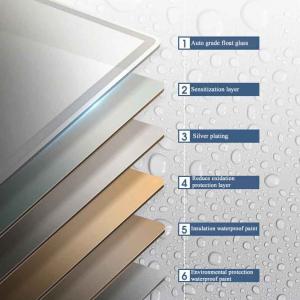
Low-E (low-emissivity) glass has a microscopically thin metallic oxide coating that reflects heat while letting light pass through. Think of it as a heat mirror—it sends indoor heat back inside in winter and reflects outdoor heat away in summer.
Two types matter for single hung windows:
-
Passive Low-E: Optimized for cold climates, allows solar heat to enter while retaining indoor heat
-
Solar Control Low-E: Optimized for warm climates, blocks solar heat gain while letting light through
Argon gas fills the space between panes. It's denser than air, reducing convection currents that transfer heat. Krypton is used in thinner spaces (better but more expensive).
The performance jump:
-
Clear double-pane: U-factor 0.48
-
Low-E double-pane (air fill): U-factor 0.32–0.38
-
Low-E double-pane (argon fill): U-factor 0.25–0.30
Obscure, Tempered, and Impact Glass Options
Obscure glass (patterned, frosted, etched) is required by code in bathrooms and anywhere privacy matters. Most single hung window manufacturers offer obscure options, but confirm availability before assuming.
Tempered glass is heat-treated to be four to five times stronger than annealed glass. When it breaks, it shatters into small, relatively harmless cubes rather than dangerous shards. Building codes require tempered glass in:
-
Windows within 18 inches of the floor
-
Windows near doors (sidelites)
-
Bathroom windows
-
Any window where human impact is likely
Impact-resistant glass (laminated with a PVB interlayer) is required in hurricane zones (Florida, Gulf Coast, parts of the Carolinas). It's expensive but non-negotiable for code compliance and insurance.
Standard Single Hung Window Sizes: What You Need to Know
One of the first questions buyers ask: "What sizes are available?"
Common Stock Sizes
Most single hung window manufacturers produce a range of standard widths and heights. While exact dimensions vary slightly by brand, here are the typical increments:
Standard widths (inches):
24, 28, 30, 32, 34, 36, 40, 42, 44, 48
Standard heights (inches):
36, 44, 48, 52, 60, 62, 70, 72
Important distinction: These are typically the frame sizes, not the rough opening sizes. A window listed as 36" x 48" will have a frame approximately 35.5" x 47.5" to allow for shimming and leveling in a rough opening that's roughly 36" x 48".
Common combinations:
-
36" x 48" (most common bedroom size)
-
32" x 52" (bathroom size)
-
48" x 60" (picture window alternative)
-
28" x 44" (small bedroom or hallway)
Custom Sizes: When and Why You Need Them
Here's reality: not every opening in your project will match stock sizes. This is especially true for:
-
Older homes with non-standard framing
-
Renovations where original windows were custom sizes
-
Architectural designs with unique proportions
-
Commercial buildings with specific design requirements
What custom sizes cost:
-
Price premium: typically 20–40% above stock sizes
-
Lead time addition: 2–4 weeks longer than stock
-
MOQ considerations: some manufacturers require minimum quantities for custom sizes
The smart move: Before assuming you need custom sizes, measure carefully. Many "custom" requests are actually standard sizes that buyers simply didn't verify. And when you do need custom, find a single hung window manufacturer that specializes in custom work rather than trying to force a stock-only supplier to accommodate you.
Energy Efficiency Ratings: How to Read the Labels
If you're buying windows in 2026, you're going to see NFRC labels (National Fenestration Rating Council). Here's how to decode them.
U-Factor: The Most Important Number
U-factor measures how well a window prevents heat from escaping. Lower numbers are better.
| U-Factor Range | Performance Level |
|---|---|
| 0.20–0.25 | Excellent (triple-pane or high-performance double-pane) |
| 0.26–0.30 | Good (double-pane with Low-E and argon) |
| 0.31–0.40 | Acceptable (basic double-pane with Low-E) |
| 0.41–0.60 | Poor (single-pane or old clear double-pane) |
ENERGY STAR requirements by climate zone (2024 standards):
| Climate Zone | Maximum U-Factor |
|---|---|
| Northern | ≤ 0.27 |
| North-Central | ≤ 0.30 |
| South-Central | ≤ 0.32 |
| Southern | ≤ 0.35 |
Solar Heat Gain Coefficient (SHGC)
SHGC measures how much solar heat passes through the window. Lower numbers block more heat; higher numbers allow more passive solar heating.
-
Northern climates: Look for SHGC 0.30–0.40 (capture free solar heat in winter)
-
Southern climates: Look for SHGC ≤ 0.25 (block solar heat in summer)
-
Mixed climates: SHGC 0.25–0.30 offers balanced performance
Visible Transmittance (VT) and Air Leakage (AL)
-
VT: How much light comes through (0 to 1, higher is brighter). For most rooms, target VT above 0.40.
-
AL: Air infiltration rate (cubic feet of air per minute per square foot of window area). Maximum allowed is typically 0.30, but quality windows achieve 0.10–0.20.
Single Hung Windows in 2026: Market Trends and Innovations
The window industry doesn't change overnight, but it does evolve. Here's what's happening in 2026.
The Shift Toward Darker Frame Colors
Data point: According to the 2025 Window & Door Manufacturers Association survey, 62% of residential buyers now choose dark frames (black, bronze, dark gray) over traditional white.
This shift has forced material innovation, especially in vinyl. Dark frames absorb more solar heat, causing expansion that can warp cheap windows. Quality manufacturers now use:
-
Reinforced vinyl formulations with higher heat distortion temperatures
-
Multi-chambered frames that manage thermal expansion
-
Dark colors limited to frames with specific reinforcements
The takeaway: If you want black or dark bronze single hung windows, verify that your manufacturer specifically engineers for dark colors. Otherwise, you'll get warping and seal failures.
Smart Windows and Integrated Blinds
Between-glass blinds—blinds sealed inside the insulated glass unit—continue gaining popularity. Benefits:
-
No dusting or cleaning
-
No cords (safer for children)
-
Protected from damage
The 2026 trend is motorization: blinds that raise and lower via remote, app, or voice command. Premium now, but coming down in price.
Sustainability and Recycled Content
Buyers increasingly ask: "What's this window made of, and where does it come from?"
Quality single hung window manufacturers respond with:
-
GreenGuard certification for indoor air quality
-
Cradle to Cradle certifications for material sustainability
-
Recycled content in vinyl and aluminum frames
-
Supply chain transparency (where raw materials originate)
If sustainability matters to your project, ask specifically. Don't assume.
How to Choose a Reliable Single Hung Window Manufacturer
This section might save you more money than the rest of the article combined.
Domestic vs. Import: Pros and Cons for 2026
| Factor | Domestic Manufacturer | Import Manufacturer (e.g., China) |
|---|---|---|
| Cost | Higher (premium pricing) | 30–50% lower |
| Lead time | 2–6 weeks | 6–12 weeks (including shipping) |
| Customization | Limited to domestic product lines | Extensive (virtually any size, any color) |
| Communication | Easy (same language, similar time zone) | Requires planning (translation, time difference) |
| Quality control | Consistent, easy to verify | Variable (requires vetting) |
| Warranty enforcement | Straightforward | More complex (shipping costs for returns) |
| Code compliance | Meets local codes by default | Must verify compliance yourself |
My honest advice: Don't automatically rule out imports. I've worked with both domestic and international manufacturers for 15 years, and the best windows I've specified came from China single hung window factories with rigorous quality control. The worst windows I've seen came from domestic "brands" outsourcing to the lowest bidder while charging premium prices.
The key is vetting, not geography.
5 Questions to Ask Before You Buy
Ask these questions of every single hung window manufacturer you consider. How they answer tells you everything.
1. "What certifications do your windows carry?"
-
Look for: ENERGY STAR, NFRC, AAMA/WDMA/CSA certification
-
Ask for certificate numbers, verify online
2. "Can you provide independent test reports for air infiltration and structural performance?"
-
Legitimate manufacturers have these ready
-
Look for: Air infiltration (AL) under 0.30, structural test pressure ratings (DP ratings)
3. "What is your warranty on glass seal failure? On frame materials? On hardware?"
-
Glass seal: 10–20 years is standard; lifetime is better
-
Frame: 20 years to lifetime
-
Hardware: 5–10 years
-
Critical: Ask who pays shipping for warranty claims. Some warranties are worthless because shipping costs exceed replacement value.
4. "Do you offer custom sizes and grille patterns, or only stock sizes?"
-
Know this before you design around their product line
5. "Can you provide references or case studies from similar projects?"
-
Ask for projects similar to yours (same climate, same application)
-
Call those references
Red Flags: When to Walk Away
I've seen buyers ignore these warning signs and regret it. Don't be that buyer.