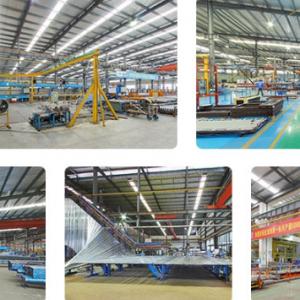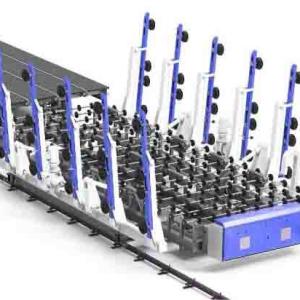

In 2026, why do some high-volume glass fabrication plants still suffer from massive yield losses despite investing in premium cutting tables? Based on my 15 years as an export manager in Chinese glass machinery—serving over 800 clients across 50 countries—the answer almost always points to the front end of the production line. When you rely on forklifts, overhead cranes, and manual labor to feed oversized float glass onto precision machinery, you are fundamentally shattering your profits before the cutting cycle even begins. Manual feeding introduces microscopic edge vibrations, unpredictable cycle times, and severe workplace safety hazards. These invisible micro-cracks later explode inside tempering furnaces, skyrocketing your scrap rates. To eliminate these bottlenecks, transitioning to a fully automated inline glass loading system is no longer an optional luxury; it is the absolute baseline for survival in a hyper-competitive global market. Throughout this comprehensive technical breakdown, we will examine exactly how to optimize your factory footprint, seamlessly interface new loading mechanics with legacy CNC controllers, and dramatically cut hidden labor costs. If you are struggling with unpredictable cycle times or excessive material waste, this analysis will reveal why mastering the feeding stage is the ultimate secret to unprecedented factory efficiency.
Quick Summary Checklist: Key Upgrades for 2026 Glass Automation
• Labor Optimization: Slash feeding-stage labor dependency by 70% while totally eliminating musculoskeletal compensation claims.
• Yield Protection: Prevent 98% of edge micro-cracks that typically cause catastrophic tempering furnace breakage.
• Legacy Compatibility: Learn the precise PLC handshake protocols needed to successfully connect loader to cnc glass table architectures without software lag.
• Space Efficiency: Deploy smart L-shape or straight-line configurations to maximize throughput in constrained industrial footprints.
• Jumbo Sheet Safety: Implement OSHA-compliant dual-circuit vacuum lifters to handle massive architectural glass panels securely.
The Hidden Price Tag: Why Manual Feeding is Bleeding Your Margins
Many procurement directors fixate entirely on the initial capital expenditure of new machinery, completely ignoring the invisible, recurring financial hemorrhages happening on their factory floor every single shift. In my experience auditing mid-to-large-scale fabrication plants across North America and Europe, the manual loading phase is consistently the most expensive, most dangerous, and most inefficient segment of the entire flat glass processing chain. When we conduct a meticulous glass plant labor cost analysis, the data is alarming.
Labor Dependency in the 2026 glass industry
According to the latest 2025 Glass Magazine surveys, severe workforce shortages remain the primary operational constraint for North American glaziers and fabricators. Attracting and retaining physical laborers willing to maneuver sharp, heavy, and fragile 10,000-pound glass packs is becoming nearly impossible. Consequently, wages for skilled floor workers have surged. But the hourly wage is merely the tip of the iceberg. The true costs include chronic worker fatigue, inconsistent cycle times (a tired worker moves slower at 4 PM than at 8 AM), and exorbitant insurance premiums tied to musculoskeletal injuries. When factory managers calculate the actual cost of a manual flat glass loading station setup, they must factor in the frequent production halts caused by personnel bottlenecks.
The Myth of "Cheap" Upgrades vs. Turnkey Glass Cutting Automation
There is a persistent myth that assigning three workers and a standard overhead crane is cheaper than investing in heavy duty glass loader capacity. Let us shatter that illusion with a pragmatic 18-month financial projection. When you migrate to full turnkey glass cutting automation, the financial returns compound rapidly across multiple vectors.
| Cost Variable | Manual Handling (Annual) | Automated Loader (Annual) | Financial Impact |
|---|---|---|---|
| Direct Labor (3 Operators) | $135,000+ | $45,000 (1 Overseer) | $90,000 Saved |
| Material Waste (Edge Chips) | 5-8% Yield Loss | Less than 0.5% Loss | Maximizes Raw Glass ROI |
| Cycle Time Inconsistency | High Variance (Fatigue) | Fixed 30-45 Sec/Sheet | +35% Daily Output |
| Workplace Injury Claims | High Risk / High Premiums | Near Zero Risk | Lowers Insurance Overhead |
These figures demonstrate why relying on human muscles to transport float glass is an archaic practice. The transition to an automatic glass loading machine acts as a financial catalyst, enabling fabricators to drastically reduce glass cutting material waste while scaling production capacity without inflating the payroll.
Space is Money: Floor Layout Strategies for Tight Factory Footprints
A common objection I hear from factory owners is, "I simply do not have the square footage for a massive robotic feeding line." This hesitation usually stems from a misunderstanding of modern glass cutting line layout optimization. Today's smart glass factory floor design relies on highly adaptable, modular machinery that can fit into surprisingly confined spaces. The goal is to eliminate forklift bottlenecks and streamline the path from glass racks to the cutting head.
Analyzing Your Workflow: L-Shape vs. Straight-Line Configurations
Depending on your building's architecture and pillar placements, you must choose between a straight-line setup or an L-shape configuration for your glass factory loader.
- The Straight-Line Flow: Ideal for long, narrow factory bays. The glass packs are stored at the far end, the loader grabs the sheet, flips it horizontally, and passes it directly onto the conveyor belts of the cutting table. This method offers the fastest cycle times but requires extensive linear footage.
- The L-Shape Configuration: Perfect for square-shaped workshops. The loader and the glass storage racks sit at a 90-degree angle to the cutting table. The machine pivots the glass sheet after retrieval, feeding it sideways into the CNC cutter. This drastically reduces the linear footprint and allows forklifts easier access to restock glass packs without blocking the main factory aisles.
Consultant's Tip: Most engineering teams fail to account for the swinging radius of the automatic arms. Always map out a 3D simulation of your factory layout to ensure the industrial glass sheet manipulator has unobstructed clearance from structural columns and overhead HVAC ducts.
Eliminating Material Bottlenecks
The most advanced CNC glass cutting equipment upgrades are useless if the machine starves waiting for glass. A highly optimized layout ensures that as one glass pack is depleted, a secondary loading station is already prepped and waiting. Double-sided loading systems allow the machine to pull from rack A while a forklift safely replenishes rack B. This continuous feeding loop prevents the dreaded "idle spindle syndrome," where your expensive cutting bridge sits motionless for 20 minutes while logistics catch up. Achieving maximum auto glass feeding system efficiency requires aligning your forklift traffic patterns perfectly with the machine's rack orientation.
Overcoming the Integration Nightmare: Connecting New Loaders to Legacy Tables
Perhaps the most daunting challenge in factory automation is retrofitting CNC glass table electronics. Factory owners often have reliable cutting machines that are five to ten years old, and they want to inject new life into them by adding a state-of-the-art loader. The nightmare scenario is purchasing an expensive piece of equipment, only to discover it refuses to "talk" to your existing software. Bridging this technological gap requires precise glass machinery PLC integration.
How to Connect Loader to CNC Glass Table Without Software Lag
Achieving seamless communication between a brand-new Siemens or Beckhoff controller on the loader and an older CNC controller on the cutting table relies on basic, hard-wired handshake protocols. Instead of relying on complex digital networking (like EtherCAT or PROFINET) which older machines might not support, experienced integrators use dry contact relays to communicate fundamental binary states.
- Signal 1: Table Ready. The CNC table sends a signal confirming the air cushion is activated, the belts are stopped, and the surface is clear.
- Signal 2: Loader Approaching. The loader confirms it has secured a sheet and is beginning the horizontal transfer.
- Signal 3: Transfer Complete. The loader confirms it has released the vacuum and retreated to a safe distance, allowing the cutting bridge to commence movement.
If these signals experience even a 500-millisecond lag, a collision between the loader arm and the cutting bridge can occur. Hardwiring these essential safety interlocks bypasses software version incompatibilities, guaranteeing that your new equipment operates harmoniously with older hardware.
Mechanical Alignment: Ensuring Micro-Precision on Older Frames
Beyond software, mechanical alignment is critical. Legacy tables often suffer from subtle frame warping or uneven floor settling over years of heavy use. When integrating a new architectural glass loader system, the height differential between the loader's drop-off point and the cutting table's felt surface must be calibrated to within 1-2 millimeters. If the loader drops the glass from too high, the impact sends shockwaves through the sheet. If it pushes the glass down too firmly, it grinds the bottom surface against the table. I always advise using high-precision laser levels during the commissioning phase to guarantee that the transition is completely frictionless.
The Micro-Crack Epidemic: Why Edge Precision Starts at the Loader
Quality assurance directors frequently battle mysteriously high breakage rates in their tempering furnaces. They blame the cutting oil, the breakout tables, or the furnace heating profiles. However, in countless factory audits, I have traced the root cause back to the very first step: the feeding process. Manual handling and clumsy mechanical loaders are the primary culprits behind the micro-crack epidemic.
How Manual Handling Causes Tempering Furnace Disasters
When workers manually pry apart glass sheets, they often tap the edges with tools or rest the heavy glass awkwardly on uneven support blocks. These seemingly minor impacts cause invisible, microscopic fissures along the glass edge. During the intense thermal stress of the glass tempering preparation process, these micro-cracks propagate at lightning speed, causing the entire pane to explode inside the furnace. This not only destroys the material but forces the factory to shut down the furnace for hours of intensive cleaning, causing massive production delays. Superior automatic glass edge quality is impossible if the raw sheet is traumatized before it is even cut.
Achieving Flawless Edges via Synchronized Handling
To permanently eradicate these defects, a robust synchronized glass handling B2B ecosystem utilizes intelligent vacuum manipulation. Modern equipment employs multi-zone suction cups with proportional pressure sensors. Instead of violently yanking the glass off the rack, the machine gently separates the sheet using targeted air blowers to break the vacuum seal between panes, followed by a smooth, servo-driven lift. The glass is never dragged across its edge, and it is lowered onto the cutting table's air cushion with zero impact force. This level of precision handling preserves the structural integrity of the raw material, drastically reducing tempering furnace explosions and skyrocketing your overall factory yield.
Conquering Jumbo Sheets: Safety Protocols and Risk Mitigation
The architectural trend over the last five years has shifted dramatically toward massive, uninterrupted facades. Consequently, glass fabricators are forced to process jumbo size sheets (frequently measuring 3300mm x 6000mm or larger). Handling these colossal panels introduces unprecedented logistical and safety challenges. You can no longer rely on human brute force; an industrial-grade float glass handling system is an absolute necessity.
The Rise of Oversized Architectural Glass
Handling jumbo sheets manually requires a dozen men, and a single slip can result in devastating injuries and thousands of dollars in ruined material. Modern jumbo glass lifting equipment is engineered with heavily reinforced steel gantry frames and oversized servo motors capable of manipulating 1,500-kilogram sheets with microscopic precision. When evaluating a B2B glass machinery supplier China or elsewhere, you must strictly audit the structural rigidity of their loading arms to ensure they do not flex or shudder under maximum weight capacities.
OSHA Compliance and Vacuum Suction Failsafes
Safety cannot be compromised when tons of fragile material are suspended in mid-air. According to OSHA glass handling safety statistics from 2024, severe injuries in manufacturing often stem from improperly secured heavy loads and falling materials. To guarantee OSHA compliant glass handling, your loader must feature redundant safety mechanisms.
- Dual-Circuit Vacuum Systems: If one vacuum pump fails, an independent secondary circuit instantly takes over, preventing the glass from plummeting to the factory floor.
- Power Outage Accumulators: In the event of a sudden factory blackout, onboard pressure tanks maintain suction on the glass for a minimum of 20 to 30 minutes, allowing workers to safely clear the area and manually secure the load.
- Acoustic and Visual Alarms: Automated warning beacons and sirens alert the floor operators when vacuum pressure drops below safe operating thresholds.
Industry Insight: Never bypass safety sensors to artificially increase cycle speeds. The temporary gain in auto glass feeding system efficiency will quickly be erased by a single catastrophic workplace accident and the subsequent regulatory fines and insurance spikes.
Ask the Expert: Frequently Asked Questions on Glass Automation
In my daily interactions with factory owners globally, several critical questions repeatedly surface regarding the deployment of automatic loading technology. Here are the unvarnished answers based on real-world implementations.
Q1: What is an inline glass loading system?
A: Based on my experience, it is an automated mechanical apparatus positioned at the start of a processing line. It utilizes vacuum technology and motorized arms to autonomously retrieve raw glass sheets from storage racks and precisely position them onto a CNC cutting table, completely eliminating manual lifting.
Q2: How to connect a loader to a legacy CNC glass table?
A: You connect them using hard-wired PLC handshake protocols. We utilize dry contact relays to communicate basic binary statuses (e.g., "table ready," "loading in progress," "load complete") rather than trying to force incompatible complex network software to communicate. This ensures safety interlocks function perfectly.
Q3: What are the hidden costs of manual glass feeding?
A: The hidden costs are staggering. They include massive material waste from edge micro-cracks, high workers' compensation premiums due to back and neck injuries, unpredictable daily throughput due to worker fatigue, and the high payroll burden of maintaining a 3-to-4 person feeding crew per shift.
Q4: Why is turnkey glass cutting automation important for tempering?
A: Because automation eliminates human-induced edge micro-fractures. When glass is fed automatically, it experiences zero edge impact. Clean, pristine edges are mandatory for surviving the thermal stress of a tempering furnace. Dirty manual handling guarantees high breakage rates later in the process.
Q5: How much floor space does a glass factory loader need?
A: It depends heavily on the machine configuration. A single-sided loader in an L-shape setup can operate in surprisingly tight spaces (requiring only a few extra meters beyond the rack footprint). Straight-line jumbo setups require significantly more linear space to accommodate the flip and travel distance.
Q6: How to handle jumbo glass sheets safely in factories?
A: You must utilize OSHA-compliant heavy-duty automated loaders featuring dual-circuit vacuum pumps, power-loss accumulator tanks, and heavy-gauge steel gantries. Manual handling of 3300mm x 6000mm sheets is fundamentally unsafe and should be strictly prohibited in modern facilities.
Q7: Does a synchronized glass handling B2B system reduce micro-cracks?
A: Yes, absolutely. I've personally seen factories drop their tempering breakage rates by over 80% simply by implementing smooth, servo-driven vacuum loading. The system separates and lifts the glass without grinding or striking the delicate edges.
Q8: How to synchronize PLC software on glass machinery?
A: Synchronization requires a qualified automation engineer to map the I/O (Input/Output) addresses between the two controllers. We define exact timing sequences so the loader knows exactly when the CNC cutting bridge is parked and the air cushion is active, preventing catastrophic mechanical collisions.
Q9: What is the maximum weight capacity of an automatic glass loader?
A: Standard architectural models easily lift 500 to 800 kg. However, specialized heavy-duty jumbo loaders are engineered to safely manipulate glass sheets weighing in excess of 1,500 kg (over 3,300 lbs), provided the factory floor has adequate load-bearing foundations.
Q10: How to optimize factory layout for glass cutting lines?
A: You optimize by conducting a rigorous 3D workflow simulation that maps out forklift traffic, glass rack storage, and the swing radius of the machinery. The ultimate goal is creating an uninterrupted, unidirectional flow of material from raw inventory through the cutter and breakout tables.
Written by Ethan Sterling
15 Years Export Manager in Chinese Glass Machinery | Served 800+ Clients in 50 Countries
Throughout my career, I have dedicated myself to diagnosing the hidden inefficiencies that cripple modern glass fabrication plants. My approach combines harsh operational realities with advanced automation engineering, ensuring that factory owners invest in solutions that yield genuine, measurable financial returns. From retrofitting older CNC tables to designing massive jumbo sheet production lines, my goal is to protect your yield and maximize your throughput.
Upgrading your factory's feeding capabilities is no longer a futuristic concept—it is the financial baseline required to survive in 2026. Stop shattering your profits through archaic manual handling methods.
Get Free Quote in 12 Hours
References:
1. OSHA 2024 Annual Report of Injuries and Illnesses - Occupational Safety and Health Administration.
2. Glass Manufacturing Industry Council (GMIC) - 2025/2026 Industry Challenges and Workforce Shortages.
3. Glass Handling Safety Standards - Glass Magazine.
1. OSHA 2024 Annual Report of Injuries and Illnesses - Occupational Safety and Health Administration.
2. Glass Manufacturing Industry Council (GMIC) - 2025/2026 Industry Challenges and Workforce Shortages.
3. Glass Handling Safety Standards - Glass Magazine.