Description
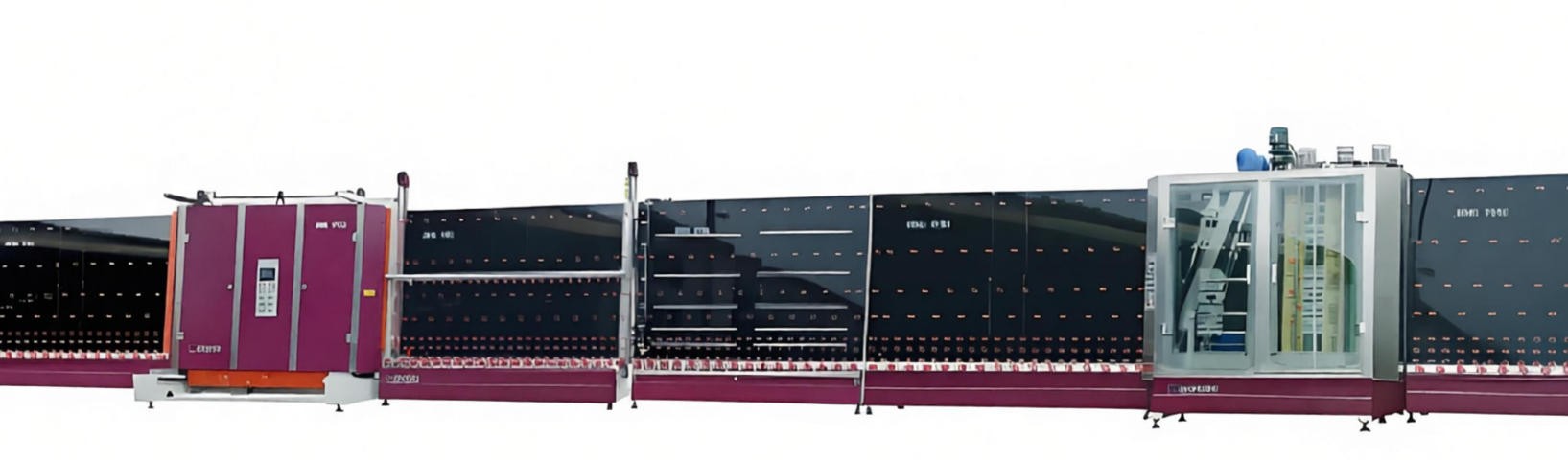
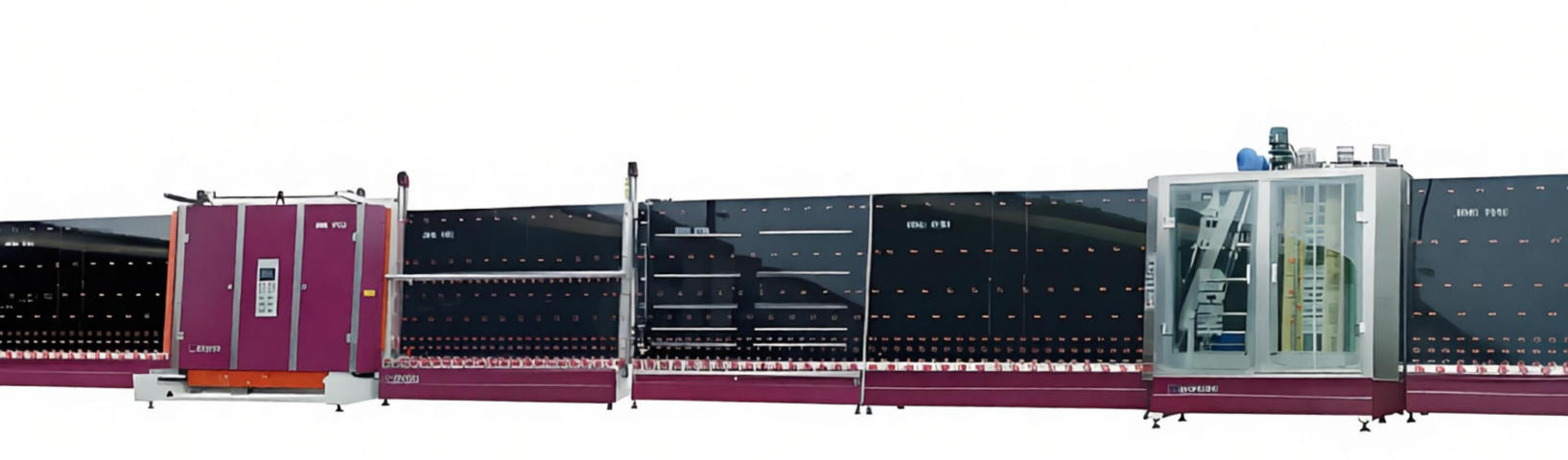
Stop bleeding profit to manual spacer alignment, scratched soft-coat glass, and leaking offline argon fills. When a single rejected commercial curtain wall lite costs $400 to $1,200 in remake materials and delayed site penalties, outdated assembly equipment quietly destroys your shop margin. Engineered by Hiking Glass, our heavy-duty insulating glass production line combines Low-E-safe washing, precision spacer positioning, synchronous online gas filling, and hydraulic flat pressing inside one automated footprint. Read through this procurement-grade breakdown to benchmark real cycle times, verify gas fill math, avoid costly factory layout mistakes, and select the exact configuration that pays for itself inside 20 months.
- Lock In 90%+ Argon Retention: Replace wasteful offline corner-drilling with bottom-up synchronous flat-press gas displacement built for consistent thermal performance.
- Eliminate Soft-Coat Low-E Scratches: Protect fragile silver coatings using six 0.1 mm soft nylon brushes, automatic coating-side sensors, and friction-free air-floating panels.
- Slash Shop-Floor Labor by Up to 60%: Run 600 to 1,200+ double or triple glazing units per 8-hour shift with just two to three operators instead of six.
- Process Double, Triple & Stepped Units Seamlessly: Switch effortlessly between 3 mm residential lites, 19 mm laminated architectural glass, and four-sided stepped facade units up to 60 mm total thickness.
- Cut Argon Consumption by 25%–35%: Automatic height and length measurement calculates exact cavity volume on the fly, eliminating the over-purging common on timed blowers.
- Run 24/7 with Industrial-Grade Controls: Rely on globally stocked Siemens or Schneider PLCs, SMC pneumatics, and corrosion-proof 304 stainless steel washing tanks.
- Hit Faster Cash-Flow Payback: Capture European-class optical quality and sealing repeatability at 40%–55% lower capital investment, targeting a 14-to-20-month break-even window.
- Pass Strict Compliance Audits Without Guessing: Produce hermetically sealed glazing units engineered to meet EN 1279, ASTM E2190, and IGCC certification thresholds right off the line.
1. Why Upgrading Your Insulating Glass Production Line Matters in 2026
Architectural glazing is no longer a commodity float-glass cutting game. Across North America, Europe, and Australia, commercial developers and window fabricators face tighter thermal codes every 18 months. If your shop still relies on manual frame placement or slow horizontal washers, you are actively getting priced out of profitable commercial bids.
In our experience commissioning fabrication plants across four continents, the gap between profitable glass processors and struggling ones comes down to one metric: first-pass IGU yield per labor hour. Upgrading to a modern insulating glass production line solves both throughput bottlenecks and compliance risk simultaneously.
Global Energy Codes (IECC & EPBD) Driving Double-to-Triple Glazing Shifts
Industry market analysis projects the global insulated glass market to surpass $16.4 billion in 2026, propelled directly by the EU Energy Performance of Buildings Directive (EPBD) and updated North American IECC commercial envelope mandates. Whole-window U-factor targets have dropped below 0.25 Btu/(hr·ft²·°F) in northern climate zones.
Hitting that U-value thermal insulation performance requires triple-pane glazing, low-emissivity soft coatings, warm-edge spacers, and verified inert gas fills. Standard manual lines simply cannot hold parallel alignment across three heavy lites without introducing seal stress or uneven sightlines.
The Hidden Margin Drain of Semi-Automatic & Manual Argon Filling
Here is what most equipment sales reps will never show you on a spreadsheet: offline argon filling looks cheap on paper, yet costs a mid-sized window plant thousands every single month. Drilling spacer corners, inserting gas lances, waiting 60 to 90 seconds per unit, and plugging holes manually creates three compounding losses:
- Gas Wastage: Operators routinely over-purge cavities by 40%–60% because they have no real-time sensor feedback.
- Seal Failure Claims: Every physical hole drilled into an aluminum or warm-edge spacer creates a future moisture-ingress vulnerability.
- Severe Bottlenecking: One slow gas-filling station stalls your washing machine, sealing table, and delivery trucks downstream.
2. Inside Our Vertical Insulating Glass Line: Core Mechanical Architecture
Every high-output double glazing production line lives or dies on mechanical rigidity. Thin sheet-metal frames flex after 18 months of loading 200 kg architectural lites, throwing off press parallelism by 1 to 2 millimeters. That tiny twist causes premature butyl blowouts and uneven glass corners.
When fabricators evaluate a vertical insulating glass line, we always tell them to inspect the washing zone, backrest plates, and press drive shafts before looking at the touchscreen. Those three zones determine 90% of your daily uptime.
Zero-Scratch Washing & Drying Built for Soft-Coat Low-E Glass
Modern double- and triple-silver Low-E coatings scratch if a stiff brush bristle drags dry dust across the surface for even half a second. Our integrated automatic glass washing and drying machine uses a full 304 stainless steel wet chamber paired with six independent 0.1 mm high-density soft nylon brushes—never abrasive coarse bristles.
Before glass enters the first spray bar, an automatic Low-E coating detection sensor scans the sheet and signals the PLC if the metallic surface faces the wrong side. During soft-coat Low-E glass washing, brush pressure adjusts smoothly while angled 15-degree stainless air knives strip away moisture using filtered, temperature-controlled air so zero watermarks survive into the inspection bay.
Air-Floating Backing Plate & Synchronized Conveyor Mechanics
Traditional backrest rollers leave faint rubber scuff marks or micro-scratches on coated glass when heavy panels shift vertically. Hiking Glass replaces standard contact rollers in critical assembly and pressing zones with a precision air-floating backing plate. Controlled micro-jets of compressed air cushion the glass surface so sheets glide effortlessly on a zero-scratch glass conveyor system.
Synchronized timing belts and heavy-duty polyurethane bottom rollers drive glass at speeds up to 45 m/min between stations. Smooth acceleration curves controlled by frequency inverters prevent tall, narrow lites from tipping or colliding.
Smart Frame Positioning & Warm Edge Spacer Compatibility
Whether your buyers specify traditional bent aluminum frames, stainless steel, or thermal plastic spacers, alignment accuracy dictates edge-seal lifespan. Dual-axis optical positioning stops allow fast, repeatable warm edge spacer application with ±0.5 mm sightline consistency.
Need to build complex commercial facades? Our optional stepped IGU production equipment package lets operators press two-, three-, and four-sided stepped units automatically without manually wedging wooden shims inside the flat press.
3. Precision Online Argon Gas Filling IG Line Technology
If you sell into commercial projects or energy-rated residential programs, gas concentration is not a marketing talking point—it is a pass/fail contractual audit. An engineered argon gas filling IG line turns gas filling from a slow manual chore into an invisible, high-speed stage inside the flat press.
We have seen this exact mistake on shop floors: buyers purchase a budget "gas-ready" line that simply blows argon from a single bottom pipe into an open press. Turbulence mixes room air into the cavity, leaving concentration stuck at 68%–75%—well below the 85%–90% threshold required for certified glazing.
How Synchronous Plate-Pressing Hits 90%+ Gas Concentration
Argon is approximately 38% denser than ambient air. Our online gas filling flat press exploits this physics cleanly through segmented bottom-up laminar displacement:
- Dimensional Scanning: Photoelectric sensors read exact glass length, height, and cavity width at the press inlet.
- Zoned Valve Activation: Only the bottom gas manifolds directly beneath the glass width open—preventing wasted argon from venting into empty press space.
- Laminar Bottom-Up Fill: As the synchronous press plates close to a controlled micro-gap, dense argon enters smoothly from the bottom seam, pushing lighter ambient air straight out the top edge without turbulent eddies.
- Instant Primary Seal Lock: The millisecond internal sensors confirm target saturation, the hydraulic/servo press closes tightly, locking the butyl primary seal across all four sides before a fraction of a percent can escape.
Real-Time Concentration Monitoring & Non-Invasive Laser Testing
Built-in thermal-conductivity sensors execute continuous argon gas concentration monitoring across every shift, logging fill percentages directly on the HMI screen. If supply cylinder pressure drops or a manifold valve drifts, the screen triggers an immediate alert before bad units reach your sealing robot.
For plants running strict third-party quality documentation, our inspection discharge zone accommodates non-invasive laser gas testing instruments (such as Sparklike handheld or inline analyzers). You can verify 90%–95% fill ratios in seconds without puncturing a single finished unit.
4. PLC Automation & Automatic IGU Manufacturing Machine Controls
Mechanical hardware sets the ceiling for glass quality, but control logic decides how smoothly your night shift runs when your lead technician takes a week off. A well-built automatic IGU manufacturing machine removes operator guesswork from every transition.
Instead of wiring dozens of fragile legacy relays that take hours to troubleshoot, our electrical cabinet consolidates machine logic around modular industrial automation components you can source locally anywhere in the world.
Siemens & Schneider Electrical Architecture with Servo Positioning
Every Hiking Glass insulating glass production line runs on an industrial PLC touchscreen HMI control platform built with Siemens S7-series PLCs, Schneider switchgear, and Omron/Autonics optical sensors. Operators view live machine diagnostics, glass dimensions, washing water temperature, and argon fill status on a single English-language interface.
Inside the pressing and positioning zones, servo-driven glass positioning maintains exact thickness calibration automatically. When switching from a 24 mm double-glazed residential unit to a 44 mm acoustic triple-glazed unit, the press plate gap adjusts automatically via servo encoders—zero manual crank-wheel tuning required.
Seamless Integration with Automatic Sealing Robots & Upstream Cutting
Your insulated glass unit (IGU) machinery should never operate as an isolated island. Our vertical lines include standardized dry-contact and Ethernet handshaking signals to connect directly downstream to an automatic sealing robot for IGU supporting two-component silicone polysulfide sealing.
Upstream, pairing the line with an aluminum spacer bending machine, molecular sieve desiccant filling station, and butyl extruder primary seal applicator creates a synchronized turnkey double glazing plant where glass flows from cutting table to shipping rack with minimal hand carrying.
5. Complete Technical Specifications: 2000, 2500 & Jumbo 3300 Series
Choosing the wrong frame height is the most expensive sizing mistake in glass fabrication. Buying a 2000 mm line when 15% of your commercial patio door orders hit 2350 mm forces you to outsource your highest-margin lites. Use the verified specification matrix below to match our three standard configurations to your actual order mix.
| Technical Parameter | HG-IGL2000 (Standard) | HG-IGL2500 (Commercial Pro) | HG-IGL3300 (Jumbo Architectural) |
|---|---|---|---|
| Max. Glass Size (H × L) | 2,000 × 2,500 mm (78" × 98") | 2,500 × 3,500 / 4,000 mm (98" × 157") | 3,300 × 6,000 mm (130" × 236") |
| Min. Glass Size (H × L) | 300 × 450 mm | 300 × 450 mm | 400 × 500 mm |
| Single Pane Thickness | 3 – 15 mm | 3 – 19 mm | 4 – 19 mm (25 mm laminated opt.) |
| Max. Finished IGU Thickness | 50 mm (Double / Triple) | 60 mm (Double / Triple / Stepped) | 70 mm (Triple / Curtain Wall) |
| Washing Speed (Variable) | 2 – 10 m/min | 2 – 12 m/min | 2 – 12 m/min |
| Conveyor Transfer Speed | Up to 40 m/min | Up to 45 m/min | Up to 45 m/min |
| Washing Brushes | 6 × 0.1 mm Soft Low-E Brushes | 6 × 0.1 mm Soft Low-E Brushes | 8 × 0.1 mm Soft Low-E Brushes |
| Online Argon Fill Concentration | ≥90% (Sensor Monitored) | ≥90% – 94% (Zoned Displacement) | ≥90% – 95% (Multi-Zone Servo) |
| Typical Cycle Time (1m × 1m IGU) | 28 – 35 sec (with Argon) | 22 – 28 sec (with Argon) | 25 – 32 sec (with Argon) |
| Installed Electrical Power | ~32 kW | ~38 kW | ~48 kW |
| Compressed Air Supply | 0.8 MPa, 0.8 m³/min (Dry/Oil-Free) | 0.8 MPa, 1.0 m³/min (Dry/Oil-Free) | 0.8 MPa, 1.4 m³/min (Dry/Oil-Free) |
| Deionized Water Standard | ≤40 μS/cm Conductivity | ≤40 μS/cm Conductivity | ≤30 μS/cm Conductivity |
| Approx. Line Footprint (L × W × H) | 21.5 × 2.8 × 3.2 m | 25.5 × 3.1 × 3.6 m | 34.0 × 3.5 × 4.5 m |
| Target Shift Output (8 Hours) | 450 – 650 Units | 750 – 1,050 Units | 900 – 1,300+ Units |
Interpreting Max Glass Dimensions, Thickness Range & Cycle Speed
Most buyers fixate on maximum conveyor speed, yet real shop output depends on press cycle efficiency plus sealing speed. The HG-IGL2500 hits the commercial sweet spot for 80% of mid-to-large processors, covering standard sliding doors, commercial storefronts, and residential windows without needing jumbo overhead cranes.
If your pipeline includes high-rise towers or oversized structural glazing, step directly up to our jumbo size insulating glass line (HG-IGL3300). Its reinforced welded base prevents roller sag under 400+ kg laminated architectural lites.
Electrical, Pneumatic & Deionized Water Utility Requirements
Pay close attention to water quality before delivery day. Running untreated municipal tap water through a high-speed glass washer leaves calcium haze baked onto Low-E glass inside the sealed cavity—an irreversible defect. Maintaining deionized water conductivity at ≤40 μS/cm (using a compact reverse-osmosis unit) guarantees crystal-clear optical inspection every shift.
6. Factory Sizing & Layout Guide: Matching Output to Your Floor
Buying an oversized vertical insulating glass line that chokes your forklift aisles hurts daily output just as badly as buying an undersized machine. Smart IGU factory layout planning balances upstream tempering/cutting supply with downstream curing rack space.
Shift Output Benchmarks: 400 vs. 800 vs. 1,200+ Units Per Day
- 400 – 600 Units/Shift (Growing Window Makers): Choose the HG-IGL2000 paired with a manual or semi-automatic two-component extruder. Ideal when replacing manual hand-washing and offline gas filling.
- 750 – 1,050 Units/Shift (Regional Commercial & Wholesale Fabricators): Choose the HG-IGL2500 integrated directly with an automatic sealing robot. This configuration unlocks fast triple glazing manufacturing line capability with just three total operators.
- 1,200+ Units/Shift (High-Volume Curtain Wall & Multi-Shift Plants): Deploy the HG-IGL2500 or HG-IGL3300 with dual buffer conveyors and high-speed servo pressing so sealing never pauses while spacers load.
Pre-Installation Floor Space, Power & Utility Checklist
Before pouring concrete anchors or scheduling a container crane, verify these five shop-floor fundamentals:
- Floor Flatness: Reinforced concrete slab minimum 150 mm thick with level tolerance within ±5 mm across the full 25-meter length.
- Working Clearance: Add at least 2.5 meters in front of the line for harp-rack circulation and 1.2 meters behind for electrical cabinet doors and maintenance access.
- Voltage Customization: Standard build is 380V / 3-Phase / 50Hz; specify 480V / 60Hz (USA), 220V / 60Hz, or 415V / 50Hz during order confirmation.
- Dry Air Line: Install a refrigerated air dryer upstream of the press; wet compressed air ruins pneumatic solenoids and contaminates argon gas cavities.
- Drainage & RO Water: Position a floor drain adjacent to the washing zone and reserve a 1.5 × 1.5 m footprint for the deionized water system.
7. Real-World Applications & Verified Shop-Floor Deployments
Specs on a brochure look identical across twenty websites. What matters is how an insulating glass production line behaves on a humid Tuesday afternoon when your team switches from clear 4 mm residential panes to heavy tinted commercial curtain wall panels.
Commercial Curtain Wall & Structural Facade Fabricators
Producers supplying energy-efficient curtain wall glazing face zero tolerance for stepped-edge misalignment or gas-fill failures during third-party lab testing. Our synchronized servo flat press holds stepped overhangs squarely in place during primary pressing, allowing structural silicone robots downstream to lay uniform deep-bite seals without hand-tooling touch-ups.
Residential Window Plants Scaling Out of Manual Bottlenecks
window manufacturers bringing IGU fabrication in-house typically start with a horizontal washer and manual assembly table. Once daily demand crosses 250 units, lead times stretch from 5 days to 3 weeks and remake rates climb above 6%. Switching to an automated vertical argon line drops remake rates below 1% while cutting in-house unit costs by $3.50 to $6.00 per lite.
[E-E-A-T Editorial Insert Placeholder — Verified Shop-Floor Case Study & Chart]
Recommended Visual Asset: Insert a 2-column "Before vs. After" production audit card or bar chart from a real Hiking Glass client installation (e.g., a North American or European window fabricator). Highlight verified 90-day shop metrics: Daily Output (320 units → 840 units/shift), Argon Fill Consistency (74% manual avg. → 92.4% online avg.), Direct Operators (6 → 3), and Low-E Scratch Rejects (4.8% → 0.3%). Add one authentic shop-floor photo showing operators inspecting glass at the LED inspection zone.
Recommended Visual Asset: Insert a 2-column "Before vs. After" production audit card or bar chart from a real Hiking Glass client installation (e.g., a North American or European window fabricator). Highlight verified 90-day shop metrics: Daily Output (320 units → 840 units/shift), Argon Fill Consistency (74% manual avg. → 92.4% online avg.), Direct Operators (6 → 3), and Low-E Scratch Rejects (4.8% → 0.3%). Add one authentic shop-floor photo showing operators inspecting glass at the LED inspection zone.
8. Materials, Compliance Standards & Machine Safety Architecture
When commercial general contractors audit your plant, they inspect both your finished glass test certificates and your process controls. As a seasoned double glazing machine manufacturer with deep experience in finished insulated glass performance, we engineer our machinery backwards from global glazing certification requirements.
Manufacturing Units Built for EN 1279, ASTM E2190 & IGCC Audits
Passing EN 1279 compliance (Parts 2, 3, and 6) in Europe or ASTM E2190 IGU certification and IGCC audits in North America demands tight moisture-vapor control and under-1% annual argon leakage. Two machine factors govern those lab results:
- Uniform Primary Butyl Compression: Our multi-point synchronous flat press applies even pressure across every centimeter of the perimeter, eliminating microscopic dry channels in the PIB primary seal.
- Verified Initial Fill ≥90%: Because argon concentration starts above 90% straight out of the press—with zero drilled spacer holes—finished units retain compliance margins well past standard accelerated weathering cycles.
304 Stainless Steel Corrosion Defense & Operator Safety Interlocks
Cheap painted carbon-steel washing tanks blister and flake rust particles onto clean glass within 24 months. Every water-contact panel, spray pipe, and tank inside our washing section is fabricated from heavy-gauge 304 stainless steel. Safety light curtains, dual-hand press interlocks, emergency pull-cords, and full CE electrical compliance come built into the standard export build.
9. Honest Market Comparison: Hiking Glass vs. Semi-Auto & European Lines
Smart procurement directors always benchmark three tiers before signing a purchase order: entry-level budget lines, top-tier European OEMs, and industrial-grade export manufacturers. Here is an unfiltered side-by-side comparison so you can see exactly where our argon gas filling IG line sits in the market.
| Evaluation Criterion | Hiking Glass Vertical Argon Line | Entry-Level Semi-Auto Line | Tier-1 European OEM Line |
|---|---|---|---|
| Typical Capital Investment | Mid-Range (40%–55% below EU OEM) | Low Initial Purchase Price | Very High (2.0× – 2.8× Higher) |
| Argon Filling Method | Online Synchronous Plate-Press (≥90%) | Offline Manual Drilling (70%–82% avg.) | Online High-Speed Press (≥92%) |
| Soft-Coat Low-E Protection | 6 × 0.1 mm Soft Brushes + Auto Sensor + Air Float | Standard Brushes (High Scratch Risk) | Soft Brushes + Auto Sensor + Air Float |
| Triple & Stepped IGU Support | Standard Triple; Optional 4-Side Stepped | Manual / Slow & Error-Prone | Full Automatic Standard |
| Electrical & Wear Parts | Global Siemens / Schneider / SMC | Mixed Local Non-Standard Parts | Proprietary OEM Modules (High Cost) |
| Typical Delivery Lead Time | 35 – 50 Days | 25 – 35 Days | 6 – 12 Months |
| Realistic ROI Payback Window | 14 – 20 Months | 24 – 36 Months (High Labor Drag) | 48 – 72 Months |
Where Semi-Automatic Lines Break Down Under Commercial Volume
An entry-level line looks tempting when cash flow is tight. However, once your labor wages exceed $18–$28/hour, paying three extra operators to wash, hand-align spacers, and manually pump argon eats up the initial purchase-price savings within the first 11 months.
Why Mid-to-Large Fabricators Reconsider Tier-1 European Pricing
Top European machines are engineering marvels, especially for mega-factories pumping out 2,500+ units daily across three shifts. For regional commercial plants running 500 to 1,200 units per shift, waiting 9 months for delivery and paying $45,000/year for proprietary spare parts often stalls expansion plans. Our insulating glass production line delivers 95% of that real-world optical and thermal performance at half the capital lockup.
10. Glass Fabrication ROI & Payback Math (Real Shop Numbers)
Never buy capital machinery on gut feeling. Below is a conservative glass fabrication ROI and payback model based on a typical 1-shift commercial glazing facility upgrading from a semi-automatic line to an HG-IGL2500 online argon system (assuming 250 working days/year, 600 units/day).
| Annual Cost / Margin Driver | Semi-Auto + Offline Gas | Hiking Glass Online Argon Line | Est. Annual Net Savings |
|---|---|---|---|
| Direct Line Labor (Loaded Cost) | 5 Operators (~$200,000/yr) | 2.5 Operators (~$100,000/yr) | +$100,000 / yr |
| Argon Gas Usage & Purge Waste | High Over-Purge (~$28,000/yr) | Zoned Volume Control (~$18,500/yr) | +$9,500 / yr |
| Low-E Scratch & Seal Remakes | ~3.5% Reject Rate (~$36,000/yr) | <0.6% Reject Rate (~$6,500/yr) | +$29,500 / yr |
| Total Annual Operational Gain | Baseline | Automated High-Yield Floor | ~$139,000 / yr |
Labor Reduction & Argon Gas Savings Per Shift
Even if your local wage rate is half of North American benchmarks, cutting two full-time positions plus trimming 30% off bulk liquid argon invoices creates immediate monthly cash relief. More importantly, freeing skilled glass workers from repetitive lifting lowers workplace injury claims and turnover.
Calculating Your 14-to-20-Month Break-Even Timeline
Those $139,000 in annual direct savings do not even count new revenue from bidding higher-margin triple-glazed and commercial facade contracts you previously turned away. Most mid-sized buyers recover their full installed equipment cost inside 14 to 20 months of single-shift operation.
[E-E-A-T Editorial Insert Placeholder — Interactive ROI Worksheet or Spec Download]
Recommended Asset: Place a downloadable "2026 IGU Line ROI & Utility Calculator (.xlsx)" preview image or concise 3-step factory payback infographic here so procurement managers can share hard numbers directly with their CFO.
Recommended Asset: Place a downloadable "2026 IGU Line ROI & Utility Calculator (.xlsx)" preview image or concise 3-step factory payback infographic here so procurement managers can share hard numbers directly with their CFO.
11. Honest Pros, Cons & Practical Production Limitations
No industrial machine is right for every glass shop. Most brands hide constraints until after your deposit clears. Here is the transparent breakdown of where our automatic IGU manufacturing machine dominates—and when you should hold off.
Where This Automatic IGU Manufacturing Machine Excels
- High First-Pass Argon Accuracy: Consistently holds 90%+ concentration across variable sheet sizes without slowing down press cycles.
- True Soft-Coat Safety: Zero-scratch air-floating panels and 0.1 mm brushes eliminate expensive silver-coating rework.
- Fast Global Parts Availability: Non-proprietary Siemens, Schneider, and SMC parts prevent multi-week downtime waiting on factory-only boards.
- Scalable Turnkey Architecture: Links cleanly with existing cutting tables and automatic secondary sealing robots.
Real-World Trade-Offs & When You Should Wait
- Not Built for Micro-Shops (<150 Units/Day): If you build fewer than 120 residential panes daily, a compact semi-automatic line gives better short-term capital efficiency.
- Strict Water Maintenance Required: Skipping RO filter cartridge changes will quickly trigger conductivity alarms and spotting on Low-E glass.
- Substantial Linear Footprint: You need at least 22 to 26 unobstructed linear meters (plus sealing robot space) for smooth material flow.
12. Preventative Maintenance Protocol & 15-Year Service Life Guide
Well-maintained industrial glass machinery routinely runs cleanly for 12 to 18 years. Neglecting basic daily wash-tank hygiene and pneumatic filter draining is what ages a machine prematurely in three years.
Daily, Weekly & Quarterly Shop-Floor Maintenance Schedule
- Daily (10 Minutes at Shift End): Check deionized water conductivity meter (≤40 μS/cm), drain compressed air moisture traps, wipe optical photoelectric sensor eyes with a clean microfiber cloth, and rinse loose glass cullet from washer intake screens.
- Weekly (30 Minutes): Flush washing recirculation tanks, inspect spray nozzle flow patterns for clogs, clean rubber conveying rollers with approved glass-safe detergent, and verify argon regulator line pressure.
- Quarterly (2 Hours): Lubricate press linear guide rails and chain drives, inspect brush shaft wear for uniform contact pressure, calibrate servo zero-points, and verify argon concentration sensor accuracy against a reference laser tester.
Sourcing Standard Wear Parts & Remote PLC Diagnostics
Every Hiking Glass shipment includes a 2-year critical wear-parts kit covering proximity sensors, pneumatic seals, spray nozzles, and drive belts. Better yet, every electrical cabinet features an optional secure VPN remote-access module so our controls engineers can diagnose PLC ladder logic online in under 15 minutes—saving thousands in emergency flight bills.
13. 5 Hard Questions to Ask Any Double Glazing Machine Manufacturer
Evaluating quotes from multiple overseas suppliers can feel confusing when brochures look almost identical. Before wiring a deposit to any double glazing machine manufacturer, ask these five technical questions—their answers will instantly separate true factory builders from trading brokers.
Verifying True Online Gas Filling vs. Timed Blowers
- "Does your press use zoned bottom displacement with closed-loop concentration sensing, or a single timed valve?" Timed valves waste gas and routinely fail 85%+ concentration audits on narrow or tall panes.
- "Can you send a continuous, unedited video of your washer running double-silver Low-E glass followed by an angled spotlight inspection?" Real manufacturers gladly run live video factory acceptance tests (FAT) before crating.
- "What exact grade of stainless steel is used inside the washing chamber and water tanks?" Insist on full 304 stainless steel—never 201 stainless or powder-coated mild steel, which rusts rapidly under deionized water.
Auditing Frame Steel Gauge, Bearing Brands & Sea-Worthy Crating
- "What wall thickness is used on the main press frame steel, and which bearing/PLC brands are standard?" Demand heavy rectangular structural steel (minimum 6–10 mm welded frame sections on the press) and verifiable serial numbers on Siemens/Schneider controls.
- "How many containers are required, and is the frame engineered with modular split joints to avoid expensive open-top ocean freight?" Smart structural engineering saves $4,000 to $9,000 in shipping costs right out of the gate.
14. Global Shipping, Installation & Turnkey Plant Commissioning
Getting a 25-meter insulating glass production line safely from factory floor to full commercial production requires logistics discipline, not guesswork. We have engineered our mechanical frame layout specifically for international container shipping and rapid on-site assembly.
Container-Optimized Modular Frames That Slash Ocean Freight
Our HG-IGL2000 and HG-IGL2500 lines break down into precision-doweled modular sections that load cleanly into standard 40HQ dry shipping containers—avoiding oversized Flat Rack or Open Top surcharges whenever possible. Every sub-assembly is vacuum-wrapped with anti-corrosion VCI film, desiccant packs, and heavy timber steel-strapped bracing for zero-damage ocean transit.
On-Site Commissioning, Operator Training & Lifetime Technical Support
Before your container even leaves port, we deliver complete AutoCAD foundation drawings, electrical load diagrams, and utility hookup specs so your shop is 100% ready on arrival day. Our bilingual commissioning engineers deploy on-site (or guide your local crew via live video) to level the conveyors, calibrate argon concentration, and train your operators on real production runs—backed by a comprehensive 18-month warranty and lifetime remote PLC support.
15. Technical Buyer FAQs: Insulating Glass Production Line
What argon gas fill rate does a vertical insulating glass line achieve?
A properly calibrated Hiking Glass vertical insulating glass line with synchronous bottom-up plate pressing consistently achieves 90% to 95% argon gas concentration right off the press. Unlike manual corner-drilling methods that create turbulence and stall around 72%–80%, our system automatically measures exact pane height and length, activating only the bottom gas zones beneath the glass. Integrated thermal-conductivity sensors monitor fill levels in real time, ensuring your finished double and triple glazing units comfortably pass EN 1279 and ASTM E2190 thermal certification audits.
Can this automatic IGU manufacturing machine handle soft-coat Low-E and triple glazing?
Yes. Every Hiking Glass automatic IGU manufacturing machine is purpose-built for delicate double- and triple-silver soft-coat Low-E glass as well as full triple-pane assemblies up to 60 mm (or 70 mm on Jumbo models). An automatic inlet coating sensor detects the metallic layer before entry, while six 0.1 mm ultra-soft nylon brushes and deionized water prevent micro-scratching. Inside the pressing zone, automatic servo thickness adjustment cycles effortlessly between double glazing, heavy acoustic laminates, and multi-cavity triple-glazed units without manual mechanical re-setup.
How much factory floor space and power does an insulating glass production line need?
Floor space depends on maximum glass height and whether you add an automatic secondary sealing robot. A standard HG-IGL2000 insulating glass production line requires roughly 21.5 × 2.8 meters and 32 kW of installed electrical power. Our bestselling commercial HG-IGL2500 model occupies approximately 25.5 × 3.1 meters with a 38 kW total power draw (add 6 to 7 meters in length if pairing directly with an automatic sealing robot). You should also reserve 2.5 meters of front aisle clearance for harp racks and a dry 0.8 MPa compressed air supply.
What is the realistic payback period for upgrading to an argon gas filling IG line?
For commercial and residential glass plants producing 450 to 900 units per shift, upgrading from manual assembly to an online argon gas filling IG line typically achieves full capital payback in 14 to 20 months. Those savings come from three measurable areas: reducing direct line labor by two to three full-time operators, trimming 25%–35% off monthly argon gas purge waste, and slashing Low-E scratch or moisture-seal remakes below 0.6%. Higher-margin commercial contracts that mandate certified 90%+ gas retention often accelerate break-even even faster.
Do I need a separate automatic sealing robot and butyl extruder for a complete line?
Yes, to operate a complete turnkey workflow, the main vertical washing-and-pressing line works alongside four core auxiliary machines: an aluminum or warm-edge spacer bending machine, a molecular sieve desiccant filler, a primary butyl extruder, and an automatic two-component sealing robot (for silicone or polysulfide secondary sealing). If your shop already owns working auxiliary equipment, our insulating glass production line connects cleanly into your existing workflow—or Hiking Glass can supply the entire synchronized plant under one warranty and single container consolidation.
How does the washing zone prevent scratches and water spots on coated glass?
Glass cleanliness determines whether a hermetically sealed unit lasts 25 years or fogs inside 18 months. Our vertical washing section prevents scratches through 0.1 mm high-density soft nylon bristles, anti-corrosion 304 stainless steel spray manifolds, and zero-contact air-floating backrest zones downstream. To eliminate stubborn mineral spotting, the final rinse zone connects to a reverse-osmosis deionized water loop held at ≤40 μS/cm conductivity, followed by angled stainless steel air knives that strip 100% of surface moisture before inspection.
Can Hiking Glass customize voltage for North American 480V/60Hz or European plants?
Absolutely. As an export-focused double glazing machine manufacturer, we custom-configure every electrical cabinet to match your exact local industrial grid prior to factory assembly. Standard options include 480V/60Hz or 220V/60Hz (3-phase) for the United States and Canada, 400V/50Hz CE-compliant builds for Europe, and 415V/50Hz for Australia and the UK. Every wire is numbered to match English schematics, and UL/CE-rated Siemens or Schneider components ensure smooth local electrical inspection sign-off.
What warranty and commissioning support does a reliable double glazing machine manufacturer provide?
Any trustworthy double glazing machine manufacturer should stand behind both hardware durability and production startup. Hiking Glass provides an 18-month mechanical and electrical warranty, a pre-packed 2-year wear-parts kit inside your shipment, and full factory acceptance testing (FAT) videos running real glass before loading. Once your line arrives, our engineers provide CAD layout prep, on-site installation and operator training, plus lifetime remote PLC diagnostics so your production floor never stays stalled waiting on troubleshooting.
16. Ready to Engineer Your High-Yield Insulating Glass Production Line?
Every month spent fighting manual spacer alignment, scratched Low-E panes, and inconsistent offline gas fills quietly drains thousands from your fabrication margin. Stop guessing which configuration fits your shop floor—let our engineering team map out your exact insulating glass production line based on your max glass size, daily shift target, and local power supply.
Free Custom CAD Floor Layout 2026 Full Spec Catalog PDF Live Factory Video FAT Available 18-Month Global Warranty
Send us your target glass dimensions and daily output goal today. Our senior glass machinery engineers will return a transparent turnkey proposal, container shipping estimate, and custom floor layout plan within 12 hours.
Get Free Quote in 12 Hours →