Description
Table of Contents
- 1. Executive Summary & Production Pain Points
- 2. High-Velocity Benefit Matrix
- 3. Why Precision Double-Edging Dictates 2026 Commercial Margins
- 4. Deep-Dive Feature Breakdown: Mechanical Structural Castings
- 5. Servo Synchronization & Linear Alignment Systems
- 6. Spindle Configuration Strategies & Diamond Wheel Geometries
- 7. Target Processing Workflows & Buyer Capacity Profiles
- 8. Waterproof Integrity, Central Lubrication & Electrical Compliance
- 9. Machine Operation & Shop-Floor Deployment Lifecycle
- 10. Industrial Technical Specification Blueprint
- 11. Hiking Glass Line Integration vs. Traditional Systems
- 12. Transparent Engineering Realities: Honest Pros & Cons
- 13. B2B Factory Preventative Maintenance & Calibration Schedules
- 14. Verified Factory Performance Verification
- 15. Engineered B2B FAQ Suite
- 16. Strategic Procurement Final Action Context
1. Executive Summary & Production Pain Points
In high-volume commercial glass fabrication, edge grinding delays, micro-cracks, and out-of-square panels create massive bottlenecks before the tempering furnace. Traditional single-sided grinding equipment demands multi-pass manual rotation, multiplying operational labor costs and increasing the risk of expensive edge-chipping on heavy structural sheets. Operating a premier facility requires consistent precision, industrial reliability, and zero-defect output. Choosing a certified glass double edging machine manufacturer guarantees that structural parameters remain perfect during high-speed, multi-shift production runs.
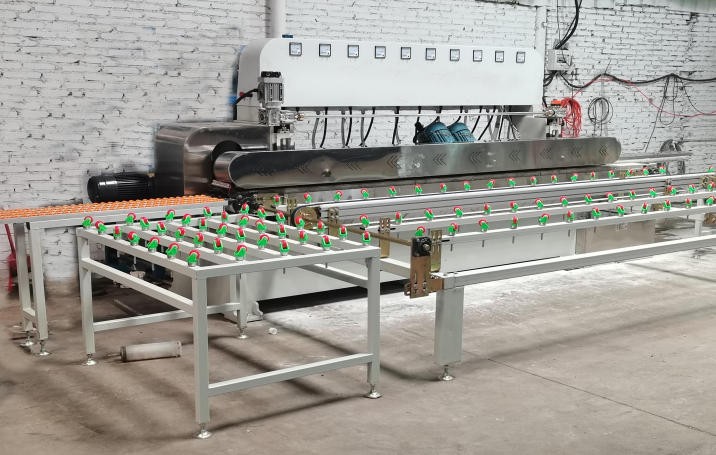
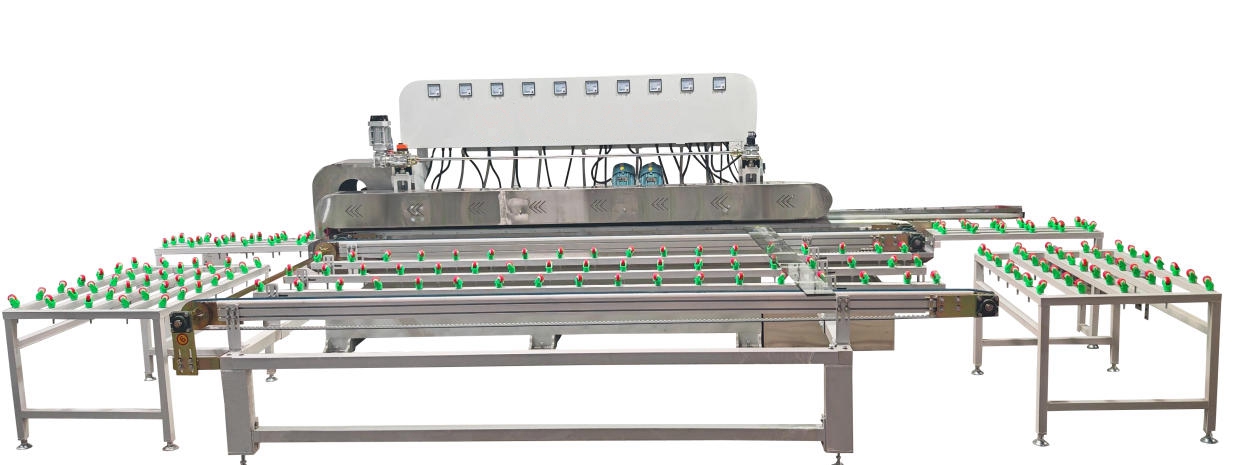
Our integrated systems deliver automated processing speeds up to 15 meters per minute while maintaining absolute diagonal squareness tolerances within ±0.3mm/m. By selecting a heavy-duty high speed double edger supplier, industrial buyers protect fragile low-E soft coatings from surface abrasions and eliminate manual adjustment delays. This advanced architectural glass double edging machine line resolves common shop-floor errors by automatically shifting sizing parameters via zero-backlash ball screw networks. This system ensures every glass panel meets strict quality thresholds prior to tempering, laminating, or double-glazing line assembly.
This heavy-duty machinery provides structural glass processors with an unyielding mechanical base engineered to absorb high-frequency vibrations during intensive diamond-wheel cutting cycles. Whether managing jumbo structural panes for commercial facades or high-volume residential glass stock, this versatile architectural glass double edging line protects your processing yield. Investing in these heavy-duty setups delivers a significant competitive advantage, reducing your product reject rates to less than 0.2% and ensuring consistent, long-term ROI across your operations.
2. High-Velocity Benefit Matrix
Investing in automated dual-edge grinding technology upgrades a basic shop floor into a highly competitive, precise industrial fabrication center.
- Accelerate Daily Line Velocity: Achieve processing throughput up to 15 meters per minute, doubling standard output without expanding your footprint.
- Eliminate Glass Edge Fractures: Fine-tuned spindle sequences protect architectural low-E panels from micro-fracturing along the glass perimeter.
- Minimize Manual Adjustments: Touchscreen PLC setups adapt width dimensions automatically within seconds, removing manual errors.
- Maintain Tight Squareness Tolerances: Synchronized tracking guarantees diagonal accuracy within ±0.3mm, protecting multi-layer laminating runs.
- Maximize Furnace Loading Ratios: Seamlessly supply fully prepped, clean-edged panes to your tempering furnace bed at a consistent rate.
- Minimize Surface Contact Scratches: Advanced timing belt paths protect delicate glass surface treatments from roller friction and marks.
- Extend Operational Service Life: Marine-grade stainless steel assemblies resist chemical rust and scale buildup over years of wet grinding.
- Reduce Operator Training Hurdles: Intuitively designed control layouts let standard machinery operators run complex batch jobs easily.
3. Why Precision Double-Edging Dictates 2026 Commercial Margins
Modern architectural standards require flawless structural integrity, making old-fashioned glass seaming methods a serious risk to profitability. In 2025 and 2026, widespread adoption of high-performance triple-silver low-E glass requires specialized handling throughout the entire grinding sequence. Microscopic edge defects can expand under thermal stress inside the tempering furnace, leading to expensive failures that can cost operations thousands in daily scrap losses.
Using a reliable igu glass prep double edger safeguards multi-layer glass panels against perimeter micro-cracking and early structural failures. Our industrial systems ensure the fine edge polishing needed to pass demanding ASTM C1048 and EN 12150-1 quality standards. Integrating a dependable dual edge glass grinder factory layout allows commercial processors to eliminate manual transit damage and maintain strong operational margins.
4. Deep-Dive Feature Breakdown: Mechanical Structural Castings
Long-term reliability begins with a rock-solid machine frame. While low-cost alternatives rely on thin, welded steel tubes that twist under heavy loads, Hiking Glass uses heavy-duty, stress-relieved cast iron bases. This robust design provides maximum dampening for high-frequency vibrations during intense 24/7 industrial fabrication schedules.
Vibration Absorption Dynamics
Massive cast iron machine beds prevent harmonic resonance from transferring to the spindle assemblies. This structural stability keeps diamond grinding wheels perfectly positioned against the glass edge, preventing chipping even during rapid acceleration phases.
Heavy-Duty Glass Grinding Machinery Structural Integrity
This heavy framework manages large 25mm structural glass panes without flex or alignment shifts. The solid machine foundation protects structural tolerances over a decade of continuous service.
Structural Glass Double Edging System Foundations
Rigid dual-bridge guides ensure the moveable machine housing moves perfectly parallel to the fixed side. This structural design eliminates the alignment drift that frequently impacts lighter, welded frames.
5. Servo Synchronization & Linear Alignment Systems
Achieving perfectly square glass requires precise mechanical timing across the entire length of the machinery line. Our systems use premium European-standard servo controls linked with absolute encoder tracking loops to regulate transit speeds dynamically.
Zero-Backlash Width Controls
Automated adjustments rely on high-precision, preloaded ball screws paired with linear guide ways. This premium hardware allows the machine to adjust its width layout within a ±0.1mm positioning accuracy threshold.
Commercial Glass Edge Grinding Equipment Positioning Loops
Advanced digital position feedback lets operators switch between different glass thicknesses automatically via the HMI touchscreen, removing the need for slow manual calibrations.
CNC Glass Double Edger Line Control Systems
The main PLC continuously syncs the driving speed of both the upper and lower timing belts. This exact timing prevents the glass panel from twisting as it travels through the grinding stations.
6. Spindle Configuration Strategies & Diamond Wheel Geometries
The quality of your finished glass edge depends directly on your spindle configuration. Hiking Glass builds custom layout patterns utilizing 20, 24, or 28 spindles tailored specifically to your daily production needs and material specifications.
Multi-Stage Grinding Sequences
Each machine side features specialized rough diamond wheels, fine resin shaping wheels, and high-purity polishing wheels. This multi-stage process removes edge stock efficiently while delivering a flawless satin or bright polished finish.
Glass Tempering Pre-Processing Line Configuration
For high-volume tempering preparation, our balanced 20-spindle configuration provides fast, continuous seaming that easily keeps pace with your furnace cycles.
Automatic Glass Width Adjustment Machine Efficiencies
Automated step-motor compensators track wheel wear patterns continuously. The control system adjusts spindle depths automatically to ensure uniform edge profiles over long production runs.
Double-Sided Glass Polishing Line Capabilities
Our cerium-oxide wheel systems deliver a water-clear edge polish on heavy structural partitions, meeting the strict aesthetic demands of premium interior designs.
Low-E Glass Double Edging Machine Surface Defense
Specialized non-marking compound drive belts prevent zinc-oxide soft coatings from contacting metal surfaces, keeping your low-E panels free from scratches.
Jumbo Size Glass Edging Line Load Management
Heavy pneumatic stabilizers keep extra-large structural panes firmly pressed against the reference tracks, preventing shifting or vibration when processing massive panels.
7. Target Processing Workflows & Buyer Capacity Profiles
Choosing the right machinery configuration requires matching your daily production volumes with the appropriate equipment scale.
Industrial Configuration Blueprint Indicator: Factories processing under 800 square meters per shift achieve optimal ROI with our standard 20-spindle model. For major industrial plants exceeding 1,500 square meters per shift, we recommend our automated 24-spindle dual-line configuration featuring automatic tracking and integrated transfer tables.
Matching Thickness to Speed
Processing thin 3mm glass for picture frames or retail display units requires high linear line speeds and low grinding pressure. Conversely, 19mm architectural structural glass requires slower feed rates paired with high cooling water volume to protect the material from thermal stress.
Glass Arrissing and grinding machinery Adjustments
The arris angle assembly adjusts independently between 0.5mm and 3mm widths. This flexibility allows operators to apply the ideal edge chamfer for a wide variety of architectural project specifications.
High-Volume Glass Edging Equipment Scaling
Connecting two double-edgers via a 90-degree automatic transfer table creates a completely automated production line. This layout finishes all four sides of a glass panel without any manual intervention.
Glass Processing Plant Layout Solutions
Our application engineers customize the setup and transfer layout to match your shop floor footprint, maximizing space and optimizing material flow to your washing and tempering lines.
Industrial Glass Seaming Line Integration
This automated configuration reduces labor costs by up to 60%, allowing factories to reallocate operators to critical quality control and final sorting stations.
8. Waterproof Integrity, Central Lubrication & Electrical Compliance
Water spray and fine glass dust create a harsh operational environment that can quickly degrade low-quality machinery. Hiking Glass uses advanced sealing and high-grade materials to isolate all sensitive mechanical and electrical systems.
Marine-Grade Enclosures
All internal splash guards and water collectors are made from high-grade stainless steel. This rust-proof design keeps cooling water fully contained within our high-volume filtration and recirculation systems.
Flat Edge Glass Grinder Supplier Standards
All spindle motors feature IP55-rated waterproof enclosures. This robust insulation protects internal electrical windings from moisture ingress and early failure during extended wet-grinding operations.
Double Edge Glass Chamfering Machine Waterproof Sealing
Specially designed labyrinths and synthetic seals protect our precision linear guideways, ensuring water and abrasive glass particles cannot penetrate critical bearing assemblies.
Glass Edging Machinery Spindle Configuration Electrical Controls
Our electrical cabinets comply with international CE and IEC 60204-1 standards. They feature premium Schneider and Siemens control components to ensure reliable operation in high-humidity factory settings.
9. Machine Operation & Shop-Floor Deployment Lifecycle
Our user-friendly automated systems allow new operators to learn the system and start producing high-quality work with minimal training time.
Step-by-Step Production Setup
Operators simply input the required width, thickness, and line speed into the central HMI touchscreen. The moveable bridge shifts smoothly to the exact target dimension within seconds.
- Verify that the central cooling water filtration system is operating at the correct 0.3 MPa pressure.
- Select the matching preset configuration on the touchscreen interface to fit your production batch specifications.
- Feed the glass panels into the inlet timing belts; automated vacuum cups align the sheet square against the drive guides.
- As the glass transits through the roughing and finishing stations, automatic sensors adjust wheel depths to match wear patterns.
- Finished panels exit onto the automated transfer bed, moving directly into the high-speed washing machine stage.
Precision Glass Double Edger Price Considerations
While the initial cost of automated machinery is higher than basic manual equipment, the substantial savings in labor and reduced scrap deliver complete capital payback within the first 14 months of operation.
Architectural Glass Edge Processing Machine Control Cycles
The integrated PLC monitors motor load metrics in real-time, instantly pausing the feed line if a cracked or improperly sized panel enters the grinding station.
10. Industrial Technical Specification Blueprint
Review the complete technical and operational specifications for our heavy-duty double edging systems below.
| Engineering Specification Parameter | Standard HK-20 Assembly | Heavy Structural HK-24 Line |
|---|---|---|
| Maximum Workpiece Processing Dimensions | 2500 mm x 3600 mm | 3300 mm x 6000 mm (Jumbo) |
| Minimum Workpiece Processing Dimensions | 300 mm x 300 mm | 400 mm x 400 mm |
| Glass Thickness Processing Range | 3 mm to 19 mm | 4 mm to 25 mm |
| Continuous Linear Tracking Velocity | 1.0 to 8.0 m/min | 1.5 to 15.0 m/min (Servo Control) |
| Absolute Diagonal Squareness Accuracy | ≤ ±0.5 mm/m | ≤ ±0.3 mm/m |
| Arris Chamfering Adjustability Profile | 0.5 mm to 2.5 mm | 0.5 mm to 4.0 mm |
| Total Connected Electrical Load Capacity | 68 kW | 95 kW to 125 kW |
insulated glass unit Pre-Edger Processing Controls
Our custom software matches glass transit speeds with the operational status of your downline washing machinery, preventing pile-ups and minimizing handling steps.
11. Hiking Glass Line Integration vs. Traditional Systems
See how our advanced engineering features compare against standard market alternatives.
| Operational Metric | Hiking Glass Integrated Machinery | Standard Market Alternates |
|---|---|---|
| Base Structure Frame Build | Stress-Relieved Heavy Cast Iron Base | Lightweight Welded Steel Tubes |
| Width Positioning Accuracy | ±0.1mm Zero-Backlash Ball Screws | Standard Chain Drive with Manual Lockouts |
| Low-E Surface Protection | Non-Marking Specialized Drive Belts | Standard Hard Rubber Roller Feeds |
| Spindle Adjustment Feedback | Automated Wear Tracking & Adjustments | Manual Crank Hand-Wheel Tuning |
Glass Machinery Automatic Lubrication System Efficiencies
A central lubrication pump automatically injects precise amounts of oil into all main bearing blocks and ball screws, keeping the machine operating smoothly and preventing dry friction wear.
Heavy Structural Glass Grinding Factory Environmental Focus
Fully enclosed grinding stations keep fine glass particulate completely contained, improving shop floor air quality and creating a safer, cleaner working environment for your operators.
12. Transparent Engineering Realities: Honest Pros & Cons
We value open, transparent communication with our factory partners. To help you make an informed decision, here is an honest assessment of our high-speed double-edging lines.
The Advantages: Flawless processing speed, exceptional diagonal accuracy, and rugged cast-iron construction that delivers stable performance over years of continuous operation. The system significantly reduces manual handling risks and lowers scrap rates down to a minimal 0.2% variance threshold.
The Realities: Our high-speed double edgers are engineered for high-volume, continuous production. If your shop handles small, constantly changing custom glass retail orders under twenty sheets per batch, the cycle time required to reposition the automated bridges will limit the line's overall efficiency. Additionally, these heavy-duty systems require a stable factory floor foundation and a consistent, clean electrical supply to prevent digital control faults.
13. B2B Factory Preventative Maintenance & Calibration Schedules
Regular maintenance ensures your machinery continues to operate with factory-level precision for a decade or more.
- Daily Shifts Checklist: Clean glass debris from the inlet sensors and check that water spray jets are providing complete coverage across all diamond wheels.
- Weekly System Tune-ups: Inspect the main drive belts for correct tension and clear any fine sludge accumulation from the lower drain channels.
- Quarterly Calibration Cycles: Check parallel alignment between the fixed and moveable bridges using a master structural calibration square, making fine mechanical adjustments if any deviation is found.
High-Speed Glass Edger Line Throughput Maintenance
Replacing worn diamond wheel segments before they reach their maximum wear threshold avoids spindle overheating and ensures a clean, chip-free glass finish at high feed speeds.
Glass Double Edger Servo Synchronization Checks
Regularly check the digital tracking metrics on your servo drives to catch minor synchronization lags before they can grow large enough to cause visible diagonal cutting errors.
14. Verified Factory Performance Verification
Our machinery configurations are proven in demanding, real-world production environments across the globe.
Factory Integration Case Placement Indicator: A commercial facade manufacturer integrated our HK-24 automated dual-machine line with a 90-degree transfer system. Over twelve months of continuous three-shift operations, the plant maintained structural squareness tolerances under ±0.3mm across their entire output, while reducing tempering furnace scrap losses by an impressive 42%.
Automatic Glass Edge Deletion Line Synchronization
Connecting our automated edge deletion tooling removes protective low-E coatings along the glass perimeter in a single, continuous pass, creating a clean surface ready for primary IGU butyl sealing.
Commercial Glass Edging Line Maintenance Benchmarks
Our centralized lubrication layout and accessible spindle designs reduce scheduled maintenance downtime by up to 35% compared to older, manually adjusted setups.
15. Engineered B2B FAQ Suite
Q1: How does the line prevent corner-chipping on premium 19mm Low-E heavy structural plates during 12 m/min processing runs?
A1: Our systems eliminate corner chipping by pairing heavy, vibration-dampening cast iron machine beds with synchronized servo-driven timing tracks. This structural rigidity prevents the glass panel from shifting when making contact with high-speed diamond grinding wheels. Advanced pneumatic cylinders steady the glass plate as it transits past the spindles, ensuring smooth, consistent wheel pressure across the entire glass surface.
Q2: What specific routine calibration cycles prevent diagonal tracking drift over a 3-shift high-volume operation?
A2: To maintain absolute squareness over long production runs, we recommend checking parallel alignment between the fixed and moveable bridges every three months using a master structural calibration square. The main PLC system features integrated software compensation loops that track encoder data from both sides continuously, automatically correcting minor tracking variations before they can impact your final cutting accuracy.
Q3: Explain how the automated PLC width adjustment protects soft-coat double-silver layers from surface scratch defects.
A3: Our specialized double-edging lines protect delicate low-E surface treatments by using custom-formulated, non-marking compound drive belts that prevent zinc-oxide soft coatings from contacting hard metal surfaces. Additionally, all overhead stabilization systems use soft, non-abrasive guide rollers, completely isolating the functional areas of your low-E glass panels from friction damage throughout the entire grinding cycle.
Q4: Can this double edging line be integrated directly into existing third-party washing and tempering lines?
A4: Yes, our equipment layouts use open-architecture PLC control networks that integrate smoothly with most standard third-party industrial processing systems. Our engineering team custom-configures the communication loops and transfer systems to match your existing line speeds, providing a balanced, continuous material flow straight through your washing stations and into your tempering furnace lines.
Q5: What cooling water specifications are required to maintain clean diamond wheel performance?
A5: To ensure clean grinding performance and maximize wheel life, the machine requires a reliable water supply at a stable 0.3 MPa pressure, with a flow rate of at least 250 liters per minute per machine side. We highly recommend using a centralized water filtration system to keep fine glass particulate levels below 50 parts per million, preventing wheel clogging and ensuring a clean edge finish.
Q6: How long does a complete wheel configuration changeover take when switching glass profiles?
A6: Our accessible spindle design allows operators to complete a full wheel set changeover in under forty minutes. For daily production shifts handling standard flat-edged glass, our automated step-motor compensators adjust tool positions instantly via the touchscreen interface, completely eliminating manual tool tuning downtime when switching between different glass thicknesses.
Upgrade Your Factory Efficiency with an Advanced Glass Double Edging Machine Line
Don't let outdated, manual grinding systems slow down your factory output and compromise your tempering yield. Join the global glass processing plants that rely on Hiking Glass heavy-duty machinery to achieve flawless edge quality and absolute squareness precision on every shift.
Backed by our Comprehensive Industrial Engineering Support and Proven 12-Month Performance Guarantee.