
Aluminum Window Awnings: Inside the Factory – How Premium Units Are Made & Why It Matters
Aluminum Window Awnings: Inside the Factory – How Premium Units Are Made & Why It Matters
Table of Contents
- Why You Should Care How Your Awning Is Made
- Not All Aluminum Is Equal: The Alloy Science
- Precision Engineering: Where Your Awning Takes Shape
- More Than Color: The Powder Coating Process
- Final Assembly & The “Torture Tests”
- Your 10-Point Quality Checklist
- Conclusion: Investing in Invisible Quality
- Frequently Asked Questions (FAQ)
Why You Should Care How Your Awning Is Made: The $2,000 Lesson
Picture two houses on the same street. Both neighbors installed sleek, white aluminum window awnings in the same summer. Fast forward three years. One awning looks brand new—vibrant, straight, and robust. The other is sagging slightly, its color faded to a chalky grey, with small bubbles of corrosion forming at the corners.
The difference wasn’t the weather. It wasn’t bad luck. The multi-thousand dollar difference in longevity and performance was locked in before installation, on the factory floor where each aluminum window awning was built. Most buyers see only the final product. They compare quotes and colors but miss the critical details that determine whether their investment lasts 5 years or 25.
This article is your backstage pass and your insurance policy. We’re taking you deep inside the manufacturing process of premium aluminum window awnings. This isn't just a theoretical tour. By the end, you’ll possess a concrete, 10-point checklist. You'll know exactly what questions to ask any supplier to separate marketing fluff from genuine, durable craftsmanship. This knowledge will empower you to avoid costly mistakes and invest in shade solutions that genuinely protect your property and your wallet for decades. That’s why this deep dive is worth your time.
Part 1: Not All Aluminum Is Equal: The Alloy Science Behind Your Awning's Skeleton
The journey of a premium awning begins not with cutting or welding, but with chemistry. The aluminum alloy is the DNA of your product—it dictates strength, flexibility, and resistance to the elements.
6063-T5 vs. 6061-T6: Decoding the Secret Code of Strength
Two alloys dominate the architectural world: 6063 and 6061. Think of 6063-T5 as the endurance runner—excellent for extrusion into complex shapes (like awning profiles), with very good corrosion resistance and a smooth, beautiful finish perfect for powder coating. It's the industry standard for high-quality fenestration.
6061-T6 is the weightlifter. It’s stronger, used in structural applications like bridges and truck frames. However, it can be slightly harder to extrude into delicate shapes and may be overkill (and more expensive) for standard residential aluminum window awnings. A premium manufacturer chooses 6063-T5 for its optimal balance of formability, strength, and finish.
Pro Tip: Always ask your supplier for the alloy specification. If they can’t provide it, consider it a major red flag. Reputable manufacturers are proud of their material choices.
The Critical Role of Wall Thickness: Why “Heft” Matters
Imagine a soda can versus a camping water bottle. Both are aluminum, but their wall thickness makes one disposable and the other durable. The same principle applies to awning frames.
Cheap units use thin, flimsy extrusions (often below 1.2mm) to cut costs. They feel light and can vibrate or warp in strong winds. Premium awnings use thicker walls (typically 1.5mm to 2.0mm+), providing a rigid skeleton that resists deflection and ensures the fabric or panel remains taut. The required thickness scales with the awning’s projection and width.
| Awning Projection (Feet) | Minimum Recommended Wall Thickness (mm) | Risk with Thinner Material |
|---|---|---|
| Up to 4 ft | 1.4 mm | Sagging, noticeable “bounce” in wind |
| 4 ft - 6 ft | 1.6 mm | Potential for permanent deformation in heavy snow/wind |
| 6 ft+ | 1.8 mm - 2.0 mm+ | High risk of structural failure, safety hazard |
The Extrusion Process: Creating a Perfectly Uniform Profile
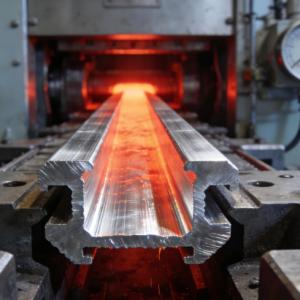
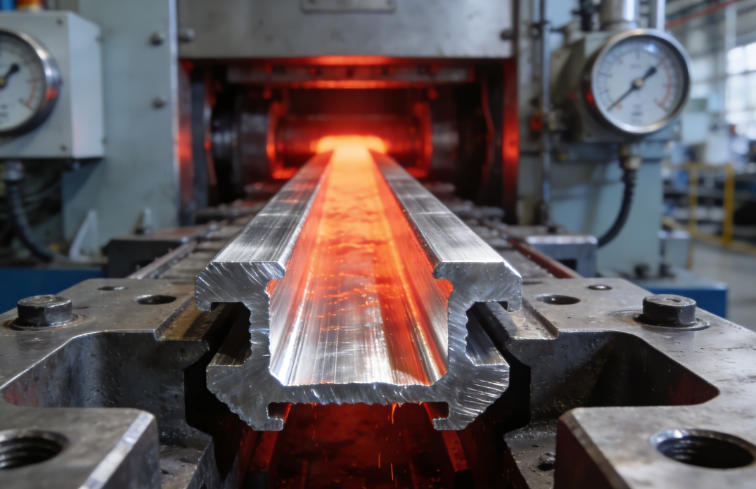
The chosen aluminum billet is heated and forced through a precision steel die—like pushing playdough through a mold. This process, called extrusion, creates the long, continuous profiles that become the awning’s arms, front bar, and wall mounts. High-quality extrusion ensures the metal’s grain structure is uniform, with no internal stresses that could cause twisting later. The profiles are then cooled and cut to standard lengths, ready for precision fabrication.
Part 2: Precision Engineering: Where Your Awning Takes Shape
With raw profiles in hand, the transformation from metal stock to a defined structure begins. This stage is all about accuracy, where tolerances of less than a millimeter determine waterproof integrity and sleek appearance.
CNC Cutting: The Digital Difference in Fit and Finish
There are two ways to cut aluminum: by hand with a saw or using Computer Numerical Control (CNC) machines. Manual cutting relies on operator skill and is prone to tiny variations. CNC machining is programmed from digital drawings, ensuring every cut is identical, perfectly square, and burr-free.
Why does this matter for your awning? Imperfect cuts lead to visible gaps at joints, misaligned frames, and compromised seals. A CNC-cut frame assembles seamlessly, creating a clean, professional look and a structurally sound unit. It’s the first visible sign of a manufacturer investing in precision.
The Genius of Hidden Drainage: A Small Hole’s Mighty Purpose
Water is the enemy of any exterior product. If water gets inside a hollow aluminum profile and can’t escape, it will eventually cause internal corrosion, even on the best alloy. Premium aluminum window awnings have discreet, strategically placed drain holes.
These are often drilled at the lowest point of end caps or corner connections. They are small enough to not be seen from a distance but essential for allowing condensation or any incidental moisture to escape. This simple, thoughtful feature doubles the lifespan of the frame by preventing “rot from within.”
High-Strength Corner Connections: The Invisible Joints That Hold Everything Together
Corners are the most stressed points. Low-end products often use simple screws or weak plastic connectors. Premium awnings use precision-machined aluminum or steel corner brackets (often called “gussets”) and high-tensile steel screws or bolts.
These connectors are designed to transfer load efficiently across the joint. During assembly, they are tightened to a specific torque to ensure rigidity without stripping. This attention to the “bones” of the structure is what allows a well-made awning to handle a heavy snow load or a gust of wind without cracking at the seams.
Part 3: More Than Color: The Powder Coating Process That Defies Sun & Salt
This is where magic meets science. Powder coating is the single most important factor in your awning’s appearance and long-term resistance to fading, chalking, and corrosion. A great coat is a seven-layer shield; a bad one is just colored dust.
Pretreatment: The Make-or-Break Foundation You Never See
Before a single speck of powder touches the metal, the aluminum must be immaculately prepared. This happens in a multi-stage wash system:
- Degrease: Removes all oils from manufacturing.
- Rinse.
- Etch/Chemical Clean: Mildly etches the surface for microscopic “tooth.”
- Rinse.
- Chromate or Non-Chrome Conversion Coating: This is the critical step. It creates a crystalline layer that bonds to the aluminum, drastically improving paint adhesion and providing an additional barrier against corrosion. Skipping or rushing this results in coating failure.
- Final Rinse.
- Dry-Off Oven: Ensures the metal is perfectly dry and warm.
The Electrostatic Booth: Where Color Gets Its Grip
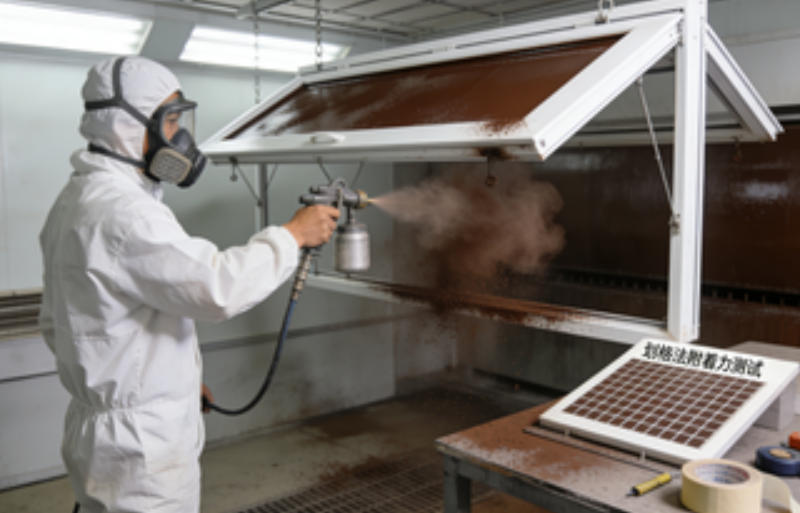
In a sealed, clean-room-like booth, the pre-treated frame is grounded. Dry, finely-ground powder (plastic resin and pigment) is sprayed through a gun that gives it a positive electrostatic charge. The negatively charged frame attracts the powder like a magnet, ensuring an even coat over every surface, including edges and hard-to-reach areas—something liquid paint often fails to do. Overspray is collected and reused, making it an efficient process.
Curing: Baking the Armor On
The coated frame enters a curing oven (typically at 380°F - 400°F for 10-15 minutes). The heat causes the powder particles to melt, flow together, and chemically cross-link, forming a smooth, continuous, and incredibly tough plastic skin. This “thermoset” finish won’t melt again, making it highly resistant to chemicals, impacts, and UV radiation.
Key Metric - Coating Thickness: A premium coat is measured in “mils” (thousandths of an inch). Industry standards for architectural aluminum call for 2-3 mils minimum. We consistently apply 3-4 mils for maximum durability. Thinner coats are prone to premature wear and UV degradation.
Quality Validation: The Scratch and Bend Tests
How do we know it worked? Random samples undergo destructive testing. The Cross-Hatch Adhesion Test uses a razor to cut a grid into the coating. Tape is applied and ripped off; the coating must remain fully intact. A Mandrel Bend Test bends a coated sample around a rod; the coating should not crack or flake. This rigorous validation is your guarantee that the beautiful color you choose will stay beautiful.
Bonus Benefit for Maintenance: This ultra-smooth, non-porous surface is also the secret to easy cleaning. When you later search for how to clean window screens or your awnings, you’ll find that dirt, pollen, and grime have a much harder time sticking to a premium powder coat. A simple hose-down is often all that’s needed, saving you time and effort for years to come.
Part 4: Final Assembly & The “Torture Tests” Before Shipping
Now, the protected frame meets its functional components. This stage combines skilled handwork with rigorous validation to ensure the awning operates flawlessly from day one.
Fabric Tensioning and Hardware: The Devil in the Details
Whether it’s a fabric canopy or a solid aluminum panel, it must be tensioned perfectly. Too loose, and it will flap noisily and wear prematurely. Too tight, and it can overstress the frame. Premium manufacturers use adjustable tensioning systems—often a combination of a roller tube and side arms with multiple locking positions—to achieve the ideal drum-tight finish.
All external hardware—hinge pins, bolts, brackets—must be stainless steel (Grade 304 for most climates, 316 for coastal “salt belt” areas). We’ve seen countless failures where cheap galvanized steel screws rust, stain the frame, and seize up, making adjustment or retraction impossible. This is a non-negotiable spec for longevity.
Factory “Torture Testing”: Simulating Decades of Weather in an Hour
Wouldn’t you want to know your awning can handle a storm before it’s over your patio? We do. Every production batch includes units pulled for destructive and performance testing.
- Wind Load Testing: The awning is mounted in a rig and subjected to positive and negative pressure (uplift) using powerful fans, simulating hurricane-force winds. We measure deflection and check for any permanent deformation. Units are rated to specific wind speeds (e.g., 90 mph) based on this data.
- Water Ingress Test: The assembled awning is placed under a simulated heavy rainstorm (per ASTM E1105 standard). Sensors inside check for any water penetration. A premium unit should have zero water ingress at the joints.
- Operational Cycle Test: For retractable models, the motor and mechanism are cycled hundreds of times to ensure smooth, reliable operation.
A Note on Aluminum Window Shutters: Parallels in Precision
The same manufacturing ethos applies to our aluminum window shutters. The precision in cutting louver blades, the use of high-grade stainless steel pivot rods (not plastic), and the rigorous powder coating process are identical. The goal is the same: to create a movable barrier that operates smoothly for decades and protects your windows with unwavering reliability. Understanding this shared commitment to quality helps you be a smarter buyer across all aluminum exterior products.
Part 5: Your 10-Point Quality Checklist: How to Interrogate a Supplier
Now, transform this knowledge into power. Use this checklist when reviewing quotes, speaking to sales reps, or inspecting samples. A confident supplier will have clear answers.
- What specific aluminum alloy and temper do you use? (Demand: 6063-T5 or equivalent).
- What is the wall thickness of the main structural profiles? (Refer to our table above).
- Are frames cut with CNC machinery for precision?
- Do the profiles include internal drainage holes to prevent water trapping?
- What is your powder coating process? Do you use a chromate pretreatment?
- What is the average dry film thickness of your powder coat? (Demand: minimum 2.5 mils, 3+ is better).
- Are all external fasteners and hardware stainless steel? What grade? (Demand: 304 or 316).
- Can you provide test reports for wind load and water penetration? (ASTM standards are best).
- What is the warranty on the frame finish? (A confident manufacturer offers 10+ years).
- Do you perform in-factory quality checks on every batch? Can you describe one?
Armed with these questions, you move from a passive buyer to an informed specifier. You’ll immediately sense which suppliers are transparent experts and which are hoping you won’t ask.
Conclusion: Investing in the Invisible – Where Real Value Lives
Choosing a premium aluminum window awning is not about buying the thickest fabric or the trendiest color first. It’s about investing in the invisible qualities: the metallurgy, the micron-thick conversion coating, the precision-cut joints, and the validated performance tests. These are the factors that deliver what you truly want: peace of mind.
You want to install it and forget it—except to enjoy the cool shade and enhanced curb appeal. You don’t want to worry about retouching paint, tightening loose joints, or replacing a failed unit in five years. That worry-free experience is the real product, and it is manufactured into every step of the process we just toured.
At Hiking Glass and Mirror, we build this philosophy into every product. We believe an educated customer is our best partner.
Ready to Specify Your Quality?
You now have the insider knowledge. Let’s put it to work. Contact our team of experts with your project details and your new checklist in hand. We’ll provide a transparent, detailed quote for aluminum window awnings built to the standards outlined here, backed by real data and a robust warranty.
Get Your Free, Detailed Project Consultation & 2024 Product Catalog. Our engineers will review your specifications and provide actionable insights within 12 hours.
Request My Free Quote & CatalogFrequently Asked Questions (FAQ)
1. How long should a high-quality aluminum window awning last?
With proper installation and minimal maintenance, a premium unit built to the standards described should last 20 to 30 years. The powder coat should resist fading for 10-15 years, and the aluminum frame itself can last indefinitely in most environments. The lifespan is directly tied to the manufacturing quality.
2. What’s the difference between powder coating and paint on aluminum awnings?
Liquid paint is sprayed on and dries by solvent evaporation. It can be thinner, run, and has weaker adhesion. Powder coating is electrostatically applied as a dry powder then baked into a thick, uniform, and chemically bonded “skin.” It is far more durable, scratch-resistant, environmentally friendly (no VOCs), and provides superior UV and corrosion protection. For exterior applications, powder coating is the unequivocal industry standard for quality.
3. Can aluminum awnings withstand hurricane-force winds?
Well-engineered and properly installed awnings can be rated for high winds (e.g., 90 mph or more). This rating comes from the specific design, material thickness, and assembly strength. Always ask for the product’s certified wind load rating. For hurricane zones, retractable awnings that can be rolled up in advance or fixed awnings with engineered “break-away” safety brackets are recommended. Never assume; verify the rating for your location.
4. How does awning frame quality affect cleaning?
A high-quality powder-coated frame makes how to clean window screens and awnings dramatically easier. The smooth, non-porous surface prevents dirt from embedding. Most grime can be removed with a gentle soap solution and a soft brush or cloth. Avoid abrasive cleaners or tools on any finish. The superior corrosion resistance also means you can wash it without fear of damaging the protective layer.
5. Are there certifications I should look for when buying?
Yes. Look for references to ASTM International standards (e.g., B221 for alloy, D968 for abrasion resistance, E1105 for water penetration). A manufacturer that tests to these voluntary, rigorous standards is committed to quality. Also, inquire about ISO 9001 certification for the factory, which indicates a certified quality management system is in place.
6. What maintenance do powder-coated aluminum awnings need?
Minimal. An annual wash with mild soap and water is sufficient to maintain appearance and prevent buildup. Inspect and tighten any hardware (using the correct tool) once a year. For retractable models, follow the manufacturer’s guide for lubricating moving parts. Avoid letting heavy vines or debris accumulate on the unit.
Further Reading & References
To deepen your understanding of materials and standards, we recommend these authoritative resources:
- ASTM International: The Science of Powder Coating Durability – An excellent article on the standards behind high-performance coatings.
- The Aluminum Association: Building & Construction – A wealth of information on aluminum alloys and their applications in architecture.
- American Architectural Manufacturers Association (AAMA) – The leading authority on fenestration standards, including performance ratings for windows, doors, and skylights (principles applicable to awnings).