
Fluted Glass Cabinet Doors: The Complete Buyer’s Guide (Sizing, Tempering & Installation)
You finally found them. The perfect fluted glass cabinet doors you’ve been dreaming about for your kitchen renovation. You click “add to cart,” enter your credit card information, and wait. Two weeks later, a large box arrives at your doorstep. You open it with excitement, only to feel your heart sink. The doors don’t fit. The glass feels thin and fragile. One of them even has a small chip along the edge.
I’ve seen this scenario play out more times than I can count in my 12 years as a production manager and export specialist in the glass industry. I’ve helped over 800 clients across 50 countries avoid these exact headaches. The problem isn’t the product itself. The problem is that most buyers don’t know what questions to ask before they place that order.
This guide is going to change that. By the time you finish reading, you will know exactly how to measure your cabinets with surgical precision, why demanding tempered rain glass is non-negotiable for safety, and how to install your new doors so they look like they were done by a master craftsman.
Whether you are looking for fluted glass cabinet doors for a kitchen, bathroom, or custom furniture piece, this guide is your blueprint. Consider it the $800 consultation you just got for free.
Quick Summary: What You’ll Learn in This Guide
-
Accurate Measuring: The exact techniques to ensure your custom doors fit perfectly the first time.
-
Tempered glass safety: Why this is the only safe choice and how to verify you’re getting it.
-
Hardware & Finishes: How to select hinges and edgework that complement the fluted design.
-
Step-by-Step Installation: A clear walkthrough to mount and adjust your doors for a professional finish.
-
Common Mistakes: The pitfalls most DIYers and even some contractors make—and how you will avoid them.
Part 1: The Foundation – What Are Fluted glass cabinet doors?
Before we dive into measurements and installation, let’s establish a solid understanding of what exactly you’re working with. The terminology can get confusing, and knowing the basics will help you communicate clearly with your supplier.
Defining Fluted Glass (Rain Glass)
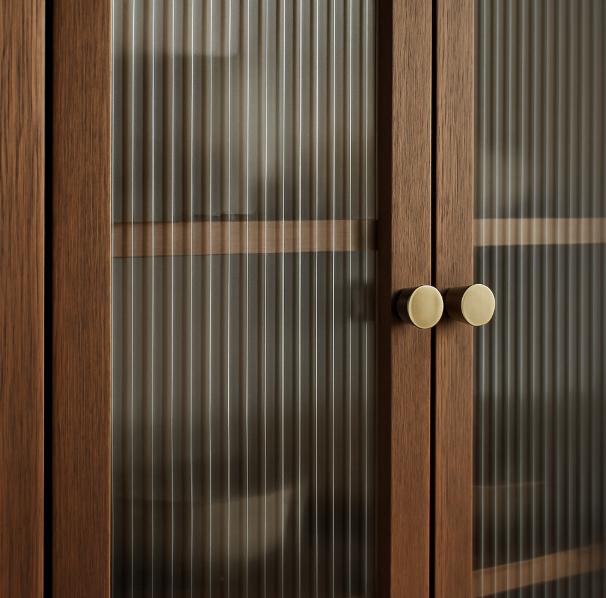
Fluted glass, often called rain glass, is a type of textured glass characterized by its distinct vertical linear grooves. These grooves create a rippled effect that mimics the look of rain streaming down a window. This texture is what gives textured glass cabinets their signature appeal.
The primary benefits of choosing fluted glass cabinet doors over other options are threefold:
-
Privacy Without Darkness: The grooves obscure the view of your cluttered dishes or medicine bottles while still allowing soft, diffused light to pass through.
-
Modern Aesthetic: The clean, vertical lines add a sense of height and sophistication, making it a favorite for modern cabinet doors.
-
Low Maintenance: The subtle texture is remarkably effective at hiding fingerprints, water spots, and smudges—a lifesaver in high-traffic kitchens and bathrooms.
Whether you’re searching for rain glass cabinet doors for a spa-like bathroom or kitchen cabinet glass that elevates your entire home, fluted glass delivers a unique blend of form and function.
Why Choose Fluted Over Clear or Frosted Glass?
This is one of the first decisions you’ll face. Let’s break it down. The choice often comes down to your specific needs for privacy and style.
| Glass Type | Pros | Cons | Best For |
|---|---|---|---|
| Fluted / Rain Glass | Excellent privacy, diffuses light beautifully, hides smudges, modern aesthetic | Slightly more expensive than clear glass | Kitchen cabinets, bathroom vanities, display cases |
| Clear Glass | Maximum light, timeless look, showcases the contents | Zero privacy, shows every fingerprint and dish | Formal china cabinets, open shelving concepts |
| Frosted Glass | Complete privacy, soft light diffusion | Can look dated, shows water spots easily, less design-forward | Lower-traffic areas where full opacity is needed |
From my experience, when a client is debating between fluted vs frosted glass, the fluted option almost always wins for its ability to stay looking cleaner for longer. If you have young children or are simply tired of wiping down your cabinets constantly, fluted glass is a game-changer.
Part 2: The Critical Pre-Purchase Step: How to Measure for Fluted Glass Cabinet Doors
Now we get to the most important part of this entire guide. I cannot stress this enough: your entire project’s success hinges on the accuracy of your measurements. In my years of handling orders for replacement cabinet doors, I’d estimate that over 70% of return issues stem from a simple measurement error.
The Golden Rule: Measure Three Times, Order Once
This isn’t just a cliché. It’s a financial safeguard. Custom cabinet door sizes are made specifically for your cabinet openings. If you give the wrong dimensions, you’re looking at weeks of delays, additional shipping costs, and the frustration of a stalled renovation.
I remember working with a client in Toronto who was in a rush. He measured the width of one cabinet door and assumed all the others were the same. He ordered 15 fluted glass cabinet doors based on that one measurement. When they arrived, five of them were too wide because the cabinet frames had shifted over time. He ended up having to return them and wait another month for the correct sizes. A few extra minutes with a tape measure would have saved him thousands of dollars and a month of time.
Tools You’ll Need and a Step-by-Step Measurement Guide
You don’t need fancy equipment. Just these three things:
-
A high-quality steel tape measure (not a cloth one)
-
A notepad and pen
-
A pencil
Follow these steps for each door you plan to replace:
-
For Replacement Doors (Existing Cabinets):
-
Measure the Width: Measure the inside of the cabinet opening at the top, the middle, and the bottom. Record the smallest of these three measurements. This is your width. Cabinets are rarely perfectly square, so using the smallest ensures the door will fit without binding.
-
Measure the Height: Measure the inside of the cabinet opening on the left side, the center, and the right side. Again, use the smallest measurement.
-
Record the Glass Opening Size: If you are ordering just the glass panel, measure the rabbet (the lip inside the door frame) to determine the exact glass door opening size your panel needs to fit.
-
-
For New Cabinets (No Existing Doors):
-
You will be measuring the rough opening. For inset doors (doors that sit flush within the frame), you will typically need to subtract a small amount for clearance. The industry standard is to order the door 1/8 inch smaller than the opening on both width and height to allow for smooth operation.
-
Avoiding the Most Common Measurement Mistakes
Here’s a checklist of errors I see weekly. Run through this before you send your order:
-
Forgetting hinge space: If you’re using European-style hinges, they require a specific cup hole diameter and depth. Ensure your door frame has enough width to accommodate this.
-
Measuring only one side: As mentioned, cabinets can be out of square. Always measure at three points.
-
Confusing inside vs. outside dimensions: Are you ordering a full door (including the frame) or just the glass panel? This distinction is crucial.
-
Not specifying glass thickness: The thickness of the glass (typically 3/16" or 1/4") affects the frame's design and the hinge selection. Don’t leave this to chance.
Part 3: The Non-Negotiable Safety Standard: Why Tempered Glass is a Must
If you take away only one thing from this entire guide, let it be this. In my 10+ years in this industry, the issue of Tempered glass safety is the one thing I never, ever compromise on. This isn’t about aesthetics or convenience. It’s about protecting your family.
Tempered Glass vs. Annealed Glass: A Life-Saving Difference
Let’s break this down simply. There are two main types of glass you’ll encounter:
-
Annealed Glass (Standard): This is the basic glass used in picture frames. It’s not heat-treated. If it breaks, it shatters into large, jagged, razor-sharp shards that can cause severe, life-threatening lacerations.
-
Tempered Glass (Safety Glass): This glass undergoes a thermal tempering process where it’s heated to over 600°C and then rapidly cooled. This makes it 4-5 times stronger than annealed glass. If it does break—and it takes a significant impact to do so—it crumbles into small, pebble-like pieces with dull edges. These are far less likely to cause serious injury.
For any safety glass for cabinets, especially in a home with children, tempered glass isn’t just a recommendation—it’s a necessity. Imagine a glass panel in a fluted glass door near the floor being accidentally struck by a heavy pot or a child’s toy. The difference between tempered and annealed in that scenario is the difference between a minor cleanup and a trip to the emergency room.
How to Verify You’re Getting Genuine Tempered Glass
Unfortunately, not every supplier is honest. I’ve seen sellers market annealed glass as “safety glass” to cut costs. Here’s how you protect yourself:
-
Look for the Stamp: Genuine tempered glass is required by law in most countries (including the US and Canada) to have a permanent, sandblasted logo or stamp in a corner of the panel. It usually says “TEMPERED” or “TEMPERED GLASS.” You cannot scrape this off.
-
Ask for Certification: A reputable manufacturer will provide test reports or certificates of compliance with safety standards like ANSI Z97.1 (US) or EN 12150 (Europe).
-
Inspect the Edges: Tempered glass has very smooth, almost polished edges. Annealed glass, when cut, can have slightly sharper, more irregular edges.
Part 4: The Buyer’s Toolkit – Glass Thickness, Hardware, and Finishes
Now that you know how to measure and what type of glass to demand, let’s talk about the components that bring it all together. This is where you can fine-tune the look and functionality.
Choosing the Right Glass Thickness
The thickness of your glass panel affects both its durability and its visual weight. The two most common thicknesses for fluted glass cabinet doors are:
-
3/16" (5mm): This is the industry standard for most cabinet doors. It provides a good balance of strength and weight. It’s perfectly adequate for upper cabinets and pantry doors.
-
1/4" (6mm): This is a step up. It feels more substantial, has a more premium look, and offers increased strength. I always recommend 1/4" for lower cabinets, large island doors, or any application where the glass will be frequently handled.
Hardware Harmony: Hinges and Handles
Your choice of hardware can make or break the final look. You have to consider the hinge type before you order the doors.
-
Hinges: For a clean, modern look, I strongly recommend European-style, concealed hinges. You’ll need to decide between overlay cabinet doors (where the door covers the face frame of the cabinet) and inset cabinet doors (where the door sits inside the cabinet opening). The hinge type dictates how the door will attach and swing.
-
Handles: The vertical lines of fluted glass pair beautifully with long, linear bar handles. The repetition of vertical lines—in the glass and the handle—creates a cohesive, elegant look. Avoid overly ornate or curved handles, as they can clash with the glass’s clean geometry.
Finishing Touches: Edgework and Frame Materials
Don’t overlook the edges. They are the first thing your hand will feel when you open a door.
-
Flat Polish: This gives the glass edge a clean, crystal-clear, perfectly square finish. It’s the most modern choice.
-
Seamed Edge: This is a process where the sharp edge is ground down just enough to be smooth to the touch. It’s a safer option and still looks very clean.
The frame of the door is equally important. If you’re using a wood or MDF frame, ensure it’s properly sealed, especially for bathroom cabinet glass applications where humidity is high. Moisture can warp an unfinished frame, causing the glass to fit improperly over time.
Part 5: Step-by-Step Installation Guide for Fluted Glass Cabinet Doors
You have your perfectly measured, tempered fluted glass door. Now it’s time to install it. With the right preparation, you can achieve a result that rivals professional installation.
Pre-Installation Checklist
Gather these items before you begin:
-
Your new fluted glass cabinet doors
-
The correct hinges (confirm they match your cabinet overlay)
-
A Phillips-head screwdriver or a drill with the correct bit
-
A level (a small magnetic level is ideal)
-
Safety glasses (always protect your eyes)
-
A soft cloth or towel to protect the glass during installation
Step 1: Installing the Hinges on the Door
The hinge cup needs to be installed into the door frame first.
-
Mark the location of the hinge cup on the back of the door frame according to the hinge manufacturer’s template.
-
Drill a pilot hole if required, then screw the hinge cup into the door frame. Be careful not to overtighten, as this can strip the wood or MDF.
Step 2: Mounting the Door to the Cabinet Frame
-
Attach the hinge mounting plate to the inside of the cabinet frame using the provided screws.
-
Clip the hinge arm (which is attached to the door) onto the mounting plate.
-
This is critical: Use your level to check that the door is perfectly plumb (vertical) and level (horizontal). Make small adjustments now; it’s much harder later.
Step 3: Final Adjustments for a Perfect Fit
Modern European hinges are a marvel of engineering. They have 3D adjustment screws that allow you to fine-tune the door’s position.
-
Side-to-side: This adjusts how the door sits left or right relative to the cabinet.
-
Up-and-down: This adjusts the vertical position.
-
In-and-out: This adjusts how far the door “sticks out” from the cabinet face, allowing you to achieve a perfectly flush fit.
Take your time with these adjustments. A perfectly aligned door with even gaps is the hallmark of a quality installation.
5 Common Installation Mistakes (And How to Avoid Them)
| Mistake | Why It’s a Problem | How to Avoid It |
|---|---|---|
| Not using a level | A door that looks slightly tilted will be noticeable and can affect how it closes. | Use a level at every stage of mounting. |
| Overtightening screws | Stripping the pilot hole or cracking the door frame. | Use a manual screwdriver for final tightening to feel the resistance. |
| Misaligning hinges | The door won’t close properly or will bind against the frame. | Double-check the hinge template and use a square to ensure proper alignment. |
| Skipping final adjustments | You settle for a door that is “good enough” but not perfect. | Use the 3D adjustment screws. A few minutes of tweaking can achieve a flawless fit. |
| Installing without protection | A screwdriver slipping can scratch the brand-new glass. | Work with the door on a padded surface and use a screwdriver with a magnetic tip. |
FAQ: Your Most Pressing Questions Answered
Q1: How much do custom fluted glass cabinet doors cost?
The cost varies widely based on several factors: the size of the doors, the type of glass (tempered costs more), the quantity you order, and the complexity of the frame. Generally, expect to pay a premium over standard flat-panel doors, but the investment adds significant value to your home.
Q2: Can fluted glass cabinet doors be used in bathrooms?
Absolutely. In fact, bathroom cabinet glass is one of the most popular applications. The texture provides excellent privacy for medicine cabinets while maintaining a light, airy feel. Just make sure the glass is tempered and the frame is sealed to resist moisture.
Q3: Are fluted glass cabinet doors hard to clean?
No, they are surprisingly easy to clean. The vertical grooves mean dust and debris don’t settle on horizontal surfaces. A simple spray of a standard glass cleaner and a wipe with a microfiber cloth is all it takes. The texture actually helps hide minor smudges between cleanings.
Q4: What is the difference between rain glass and fluted glass?
In the industry, the terms are often used interchangeably. Both refer to the same textured pattern of vertical linear grooves. If you are shopping for rain glass cabinet doors, you are essentially looking for the same product as fluted glass.
Q5: Can I get fluted glass doors for existing cabinets?
Yes, this is one of the most common renovation projects. By ordering custom-sized replacement cabinet doors, you can update your existing kitchen or bathroom without the cost of a full cabinet replacement.
Q6: How long does it take to get custom fluted glass cabinet doors?
Lead times for custom orders typically range from 2 to 4 weeks. This includes the time for manufacturing, quality control, and shipping. It’s always best to order well before your contractor needs them to avoid project delays.
Q7: Is fluted glass energy efficient?
For interior applications like kitchen and bathroom cabinets, energy efficiency is not a primary concern. For exterior applications like windows, you would need insulated glass units (IGUs), which are a different product category.
Q8: What if my measurements are slightly off?
This is why we stressed measuring so heavily. For custom orders, they are made to the exact dimensions you provide. If they are wrong, it’s often not returnable. A reputable manufacturer will work with you to confirm dimensions before production, but the responsibility for measurement accuracy ultimately rests with the buyer.
Q9: Can I install these myself, or do I need a professional?
If you are a confident DIYer with basic tools and a level, you can absolutely install fluted glass cabinet doors yourself. This guide provides the foundation. However, if you are uncomfortable with power tools or have an unusually complex cabinet layout, hiring a professional carpenter for the installation is a worthwhile investment.
Q10: What is the warranty on fluted glass cabinet doors?
Warranties vary by supplier. Always ask about coverage for manufacturing defects, glass breakage, and the integrity of the frame. A company that stands behind its products will offer a clear warranty policy.
Conclusion: Your Next Step to Beautiful, Safe Fluted Glass Cabinet Doors
You now have the complete blueprint. You know how to measure like a pro, why tempered glass is the only safe choice, how to select the right hardware, and how to install your doors for a stunning finish. You’ve seen the potential cost of cutting corners and the value of doing it right the first time.
The difference between a renovation that frustrates you and one that delights you often comes down to the quality of the materials and the clarity of the process. By following this guide, you’ve eliminated the guesswork and set yourself up for success.
At Hiking Glass, we’ve spent over a decade helping homeowners, designers, and contractors bring their visions to life with premium fluted glass cabinet doors, rain glass panels, and custom glass solutions. We believe in transparency, quality, and making the process as smooth as the final product.
Ready to transform your space? Don’t leave your project to chance. Partner with a team that has guided over 800 clients across 50 countries to successful outcomes.
Get Your Free Quote in 12 Hours →
Sources & Further Reading
-
Glass Association of North America (GANA) – Safety Glazing Standards for Architectural Applications
https://www.glasswebsite.com/ -
American National Standards Institute (ANSI) – Z97.1 Safety Glazing Materials Standard
https://www.ansi.org/ -
National Kitchen & Bath Association (NKBA) – 2026 Design Trends Report: The Rise of Textured Materials
https://www.nkba.org/
*Written by David Chen – 12 Years Production Manager & Export Specialist at Hiking Glass. Having personally overseen the manufacturing of over 50,000 glass panels and helped 800+ clients across North America, Europe, and Australia successfully complete their projects, David brings a unique blend of factory-floor expertise and real-world customer insight to every guide he writes.*